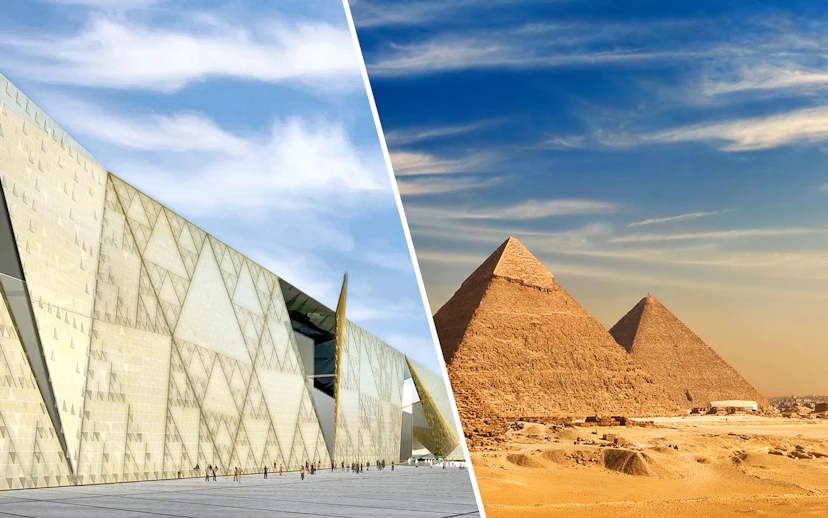
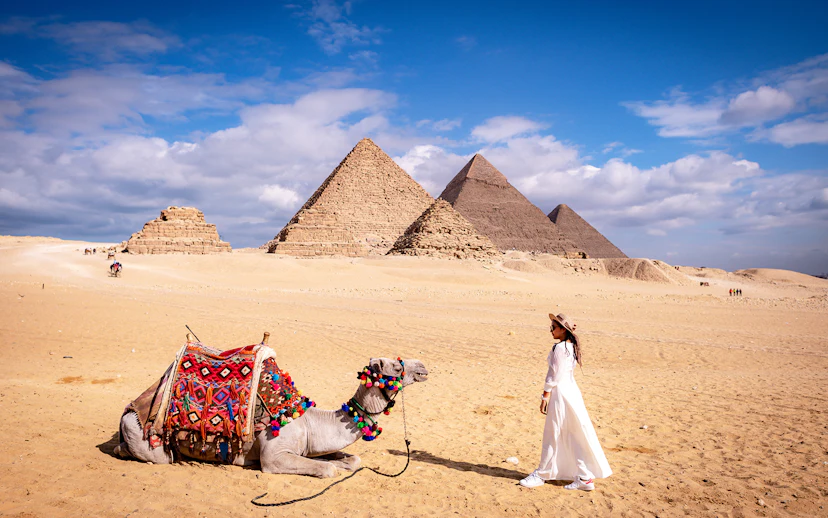
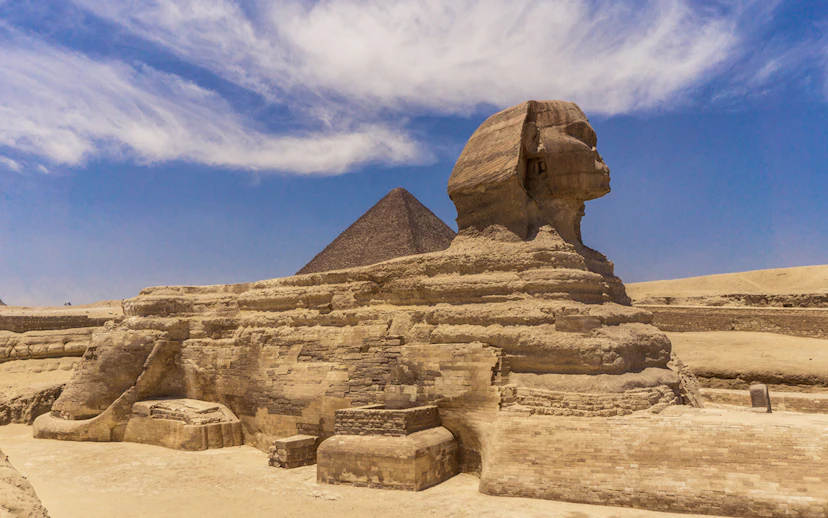
Pyramid Of Giza

Plan Your Visit to the Pyramids of Giza | Opening Hours, Getting There, Facilities & More

The Pyramids of Giza are the only surviving Wonder of the Ancient World, set on a desert plateau 15 km southwest of Cairo. The complex is bigger than most visitors expect, and the route you choose determines whether 3 hours is enough or whether you need closer to 5. Two things consistently catch visitors unprepared: the heat from May through September, when midday temperatures exceed 40°C, and persistent vendors near both entrances. This guide covers getting there, ticket options, and what to know before you go.

Quick overview: Pyramids of Giza at a glance

  • Open: Daily 7am to 5pm, last entry 4pm. Opens at 8am during Ramadan.
  • Getting in: General admission $15 for adults, $7 for students. Interior access to the Great Pyramid costs an additional $30
  • How long to allow: 3 to 4 hours for the main circuit including the Sphinx. Add 45 minutes if entering any pyramid interior.
  • When to go: Tuesday and Wednesday mornings, 7am to 9am, are noticeably calmer than Fridays and weekends.
  • What most visitors miss: The Valley Temple of Khafre, immediately east of the Sphinx, is one of the best-preserved Old Kingdom structures at Giza. Most visitors walk straight past it.

Jump to what you need

♿ Facilities and accessibility

How do you get to the Pyramids of Giza?

The Giza Plateau sits on the southwestern edge of Greater Cairo, roughly 15 to 18 km from Downtown Cairo depending on your starting point. The entrance is on Fayoum Road, on the western side of the plateau.

Address: Al Haram, Giza Governorate 3512201, Egypt

  • By taxi or ride-hailing (Uber, Careem): The simplest option from anywhere in Cairo. From Downtown Cairo, expect 30 to 45 minutes depending on traffic. Set your drop-off to the main entrance on Fayoum Road. Cost is typically 80 to 130 EGP (~$2 to $4).
  • By metro: Take Cairo Metro Line 2 to Giza Station, then a local microbus (bus 355) or taxi for the remaining 4 to 5 km to the entrance. Combined cost around 10 to 15 EGP. Total journey from central Cairo: 45 to 60 minutes.
  • By tour transfer: Most guided tours include hotel pickup and drop-off, removing the need to navigate Cairo traffic independently.

Parking: Paid parking is available near the main entrance on Fayoum Road and near the Sphinx Gate. During October through April, spaces close to the gate fill by mid-morning. Arriving before 8am gives the best chance of a spot within easy walking distance.

Reaching the Pyramids of Giza: step-by-step directions

Where and when to go

Which entrance should you use?

The Giza Plateau has two entrances. Most visitors should use the main entrance on Fayoum Road (western side), which became the primary access point in 2025. It has the visitor centre, ticket machines, restrooms, lockers, and the free shuttle bus stop.

  • Main entrance (Fayoum Road, west side): Current primary entrance with full facilities. Use this if you plan to take the shuttle bus, buy add-on interior tickets on the day, or arrive by taxi or private car. Easiest to reach via Fayoum Road from central Cairo.
  • Sphinx Gate (east side, near Khafre's Valley Temple): Pedestrian entrance that remains operational. Best if your hotel is in the Sphinx area or if you want to begin at the Sphinx and Valley Temple. Note: add-on interior pyramid tickets may only be available to purchase at the main entrance or online.
Full entrance guide

When is the Pyramids of Giza open?

  • Opening hours: Daily, 7am to 5pm (last entry 4pm)
  • Ramadan: Opens at 8am (closing time varies; confirm at egymonuments.com before your visit)
  • Closed: No regular weekly closures. Open year-round.

When is it busiest: Fridays, Saturdays, and Egyptian national holidays are the busiest days on site. October through April brings the highest volume of international visitors. The window between 9am and 1pm on any day, particularly on weekends, sees the largest tour groups at the main monuments.

When should you actually go: Arrive at opening time on a Tuesday or Wednesday. The light is best for photography early in the morning, temperatures are coolest, and you will be ahead of the large guided groups that reliably arrive between 9am and 10am.

Check the complete Pyramids of Giza schedule

💡 Pro tip: During October through April, tour groups fill the site by 9am. Arriving at 7am on a weekday gives you roughly 90 minutes at the Great Pyramid and Sphinx with far fewer people. After 10am on any day, queues at popular spots lengthen noticeably.

How much time do you need?

Visit typeRouteDurationWalking distanceWhat you get

Highlights only

Main entrance → Great Pyramid exterior → Panoramic Viewpoint → Sphinx → Sphinx Gate exit

2 to 2.5 hours

2.5 km

The three essential views, the Sphinx close-up, and the best photograph position. Does not include entering any pyramid or visiting the Valley Temple.

Balanced visit

Main entrance → Great Pyramid exterior → Panoramic Viewpoint → Pyramids of Khafre and Menkaure exteriors → Sphinx → Valley Temple of Khafre → exit

3 to 4 hours

4 km

Covers all three main pyramids, the best viewpoints, the Sphinx, and the Valley Temple. Enough time to move at a relaxed pace without rushing.

Full exploration

Full circuit above, plus Great Pyramid interior, Eastern Tombs, Queen's Pyramids, and Valley Temple at length

5 or more hours

6 km

The complete plateau with time to linger. Requires interior pyramid tickets booked in advance ($30 for Khufu; add-on for Menkaure $6).

✨ The full exploration route is difficult to navigate on your own. Signage between monuments is limited, and the most significant structures are not arranged in any obvious order. A guided tour handles the route, explains what you are looking at, and ensures the Valley Temple does not get missed.

⚠️ Watch out at both entrances.

A common approach near the Fayoum Road and Sphinx Gate involves someone handing you a "free" postcard, souvenir, or headscarf, then demanding payment once you have accepted it. Equally common: unofficial guides approaching with significantly below-market tour prices. Buy tickets only at the official gate machines, the ticket office inside the main entrance, or through headout . An unofficial ticket or guide means no recourse if something goes wrong.

Which ticket is right for you?

Ticket typeWhat's includedBest forPrice

Skip-the-line entry

Site entry, fast-track lane at the main gate

Returning visitors, or those visiting October through April when gate queues run 20 to 30 minutes

From $24

Guided half-day tour + entry + hotel transfers

Entry, licensed Egyptologist guide, round-trip hotel transfer, structured route through the main monuments

A first visit where you want historical context and do not want to navigate Cairo traffic independently

From $51

Inside the Pyramid experience

Skip-the-line entry + Great Pyramid interior access

Visiting specifically to enter the Grand Gallery and King's Chamber inside Khufu, which requires a timed slot capped at 300 per day

From $65

Full-day combo (Giza, Saqqara and Memphis)

Entry, licensed Egyptologist guide, hotel transfers, traditional Egyptian lunch, afternoon at Saqqara Step Pyramid and Memphis open-air museum

Visiting Cairo for 1 to 2 days and wanting to cover the complete pyramid story, from the first step pyramid to Giza, in a single trip

From $95

Quad biking tour

Desert ride outside the complex, optional camel ride, guide

Visiting for the landscape and panoramic views rather than the archaeology, or returning visitors wanting a different experience

From $44

Giza with Nile felucca

Guided Giza visit + traditional Nile felucca sail

Combining the plateau with a river experience in one half-day

From $45

How do you get around the Pyramids of Giza?

The Giza Plateau is best explored on foot for the main circuit, but a free shuttle bus service introduced in 2025 now connects the key stops. Private cars and tour buses are no longer permitted inside the complex.

The main monuments are spread over roughly 2.5 km of open terrain. Paths are a mix of paved roads near the entrances, sandy desert tracks between pyramids, and uneven limestone around the pyramid bases. Closed-toe shoes are strongly advisable for the sand and loose rock underfoot.

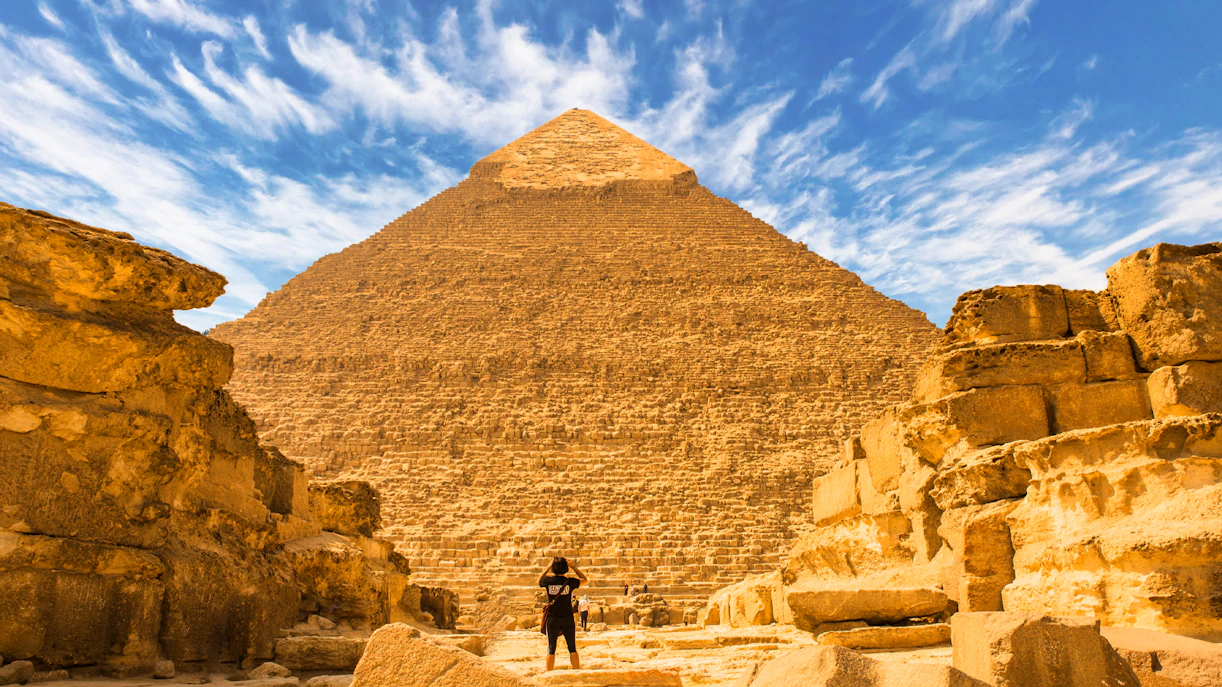
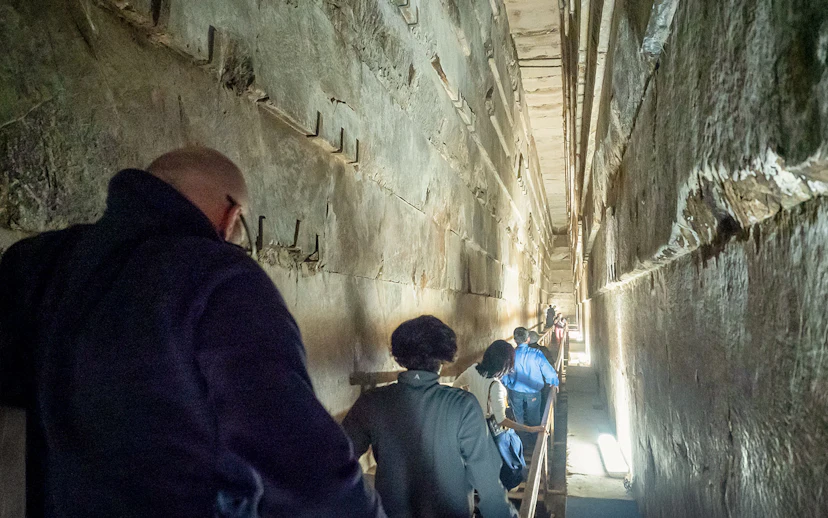
Visitor exploring the Great Pyramid of Giza on a guided tour under a clear sky.

Shuttle bus: Free with your entry ticket. Hop-on hop-off, operating across four routes connecting the visitor centre at the Fayoum Road entrance, the Great Pyramid area, the Panoramic Viewpoint, and the Sphinx. Buses run continuously; no fixed timetable. Board at any designated stop.

Key stops on the main circuit:

  • Visitor Centre (Fayoum Road entrance): Starting point. Restrooms, lockers, ticket machines, cafes, and shuttle access.
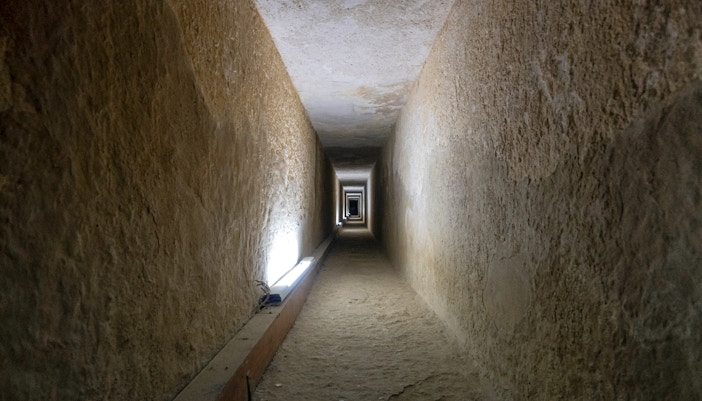
  • Great Pyramid of Khufu: Interior entry begins at 8am (separate ticket required). The ascent involves a steep, narrow 1.2-metre-high passage. Allow 20 to 40 minutes inside.
  • Panoramic Viewpoint: Best position to photograph all three pyramids in one frame. Accessible by shuttle or 30-minute walk from the main entrance. Camel rides are available here.
  • Sphinx and Valley Temple of Khafre: Eastern end of the plateau. Accessible via Sphinx Gate or by shuttle from the main circuit. The Valley Temple is directly behind the Sphinx and is free with general admission.
  • Pyramids of Khafre and Menkaure: Central-south area of the plateau. Interior access for Menkaure costs 280 EGP (~$6) when available.

💡 Pro tip: The shuttle bus loop does not always return to the Sphinx Gate. If you entered via the Sphinx Gate and plan to leave the same way, walk back east from the Sphinx area rather than relying on the shuttle to retrace your route. It takes about 15 minutes on foot.

What should you prioritise at the Pyramids of Giza?
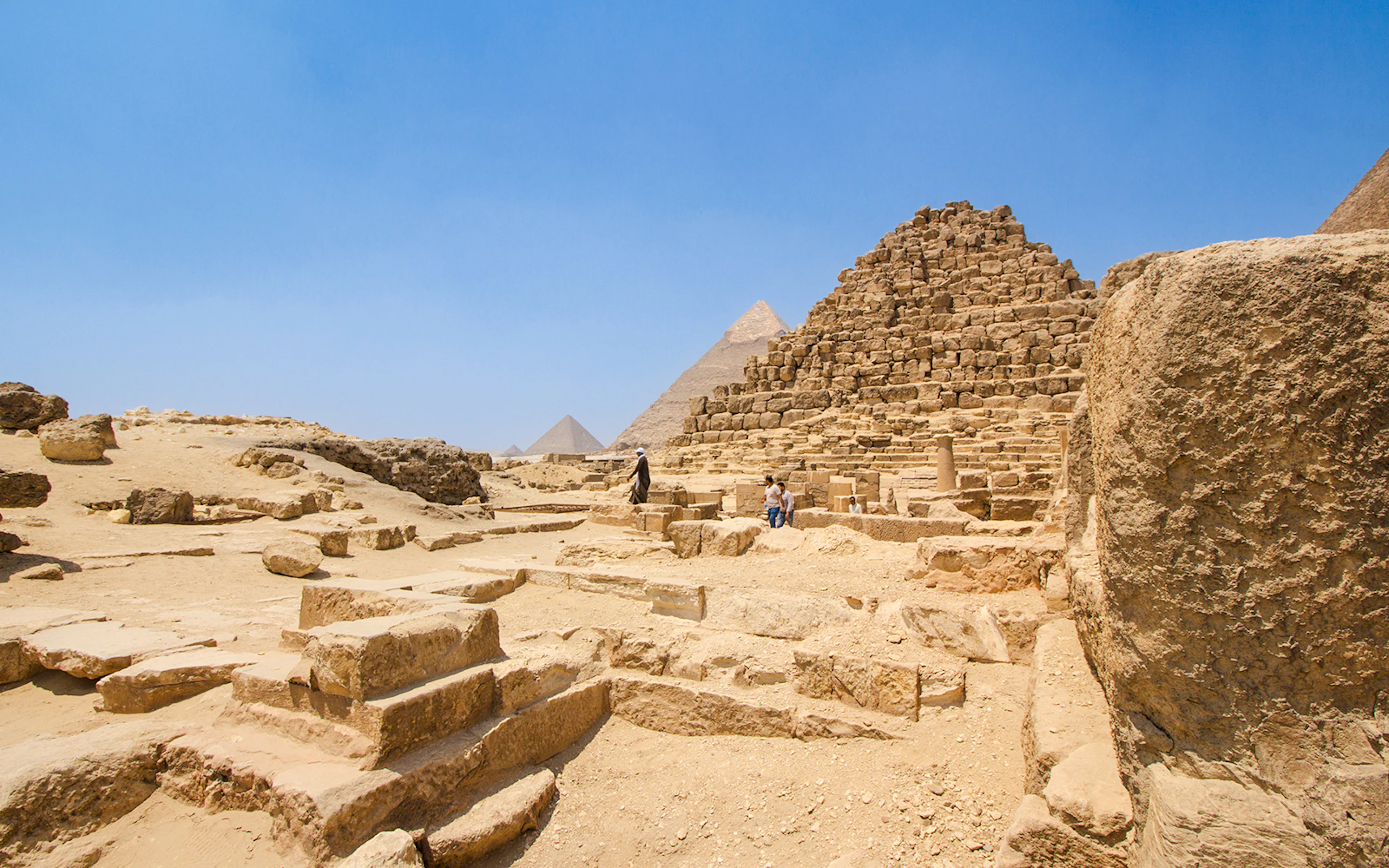
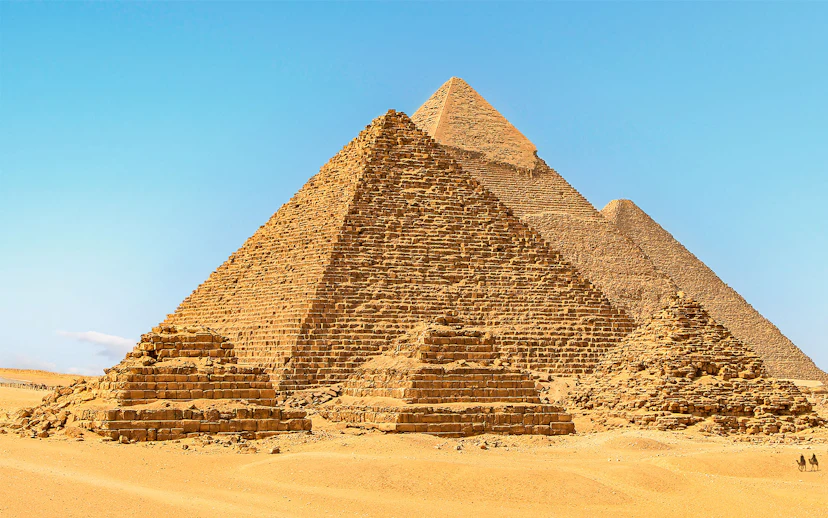
Giza Pyramid Complex with Khufu, Khafre, and Menkaure pyramids near Queen Hetepheres' tomb.
1/5

Great Pyramid of Khufu

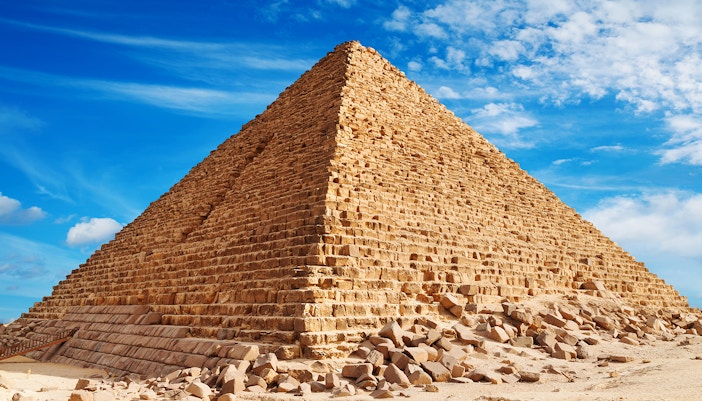
Built around 2560 BCE for Pharaoh Khufu, this is the largest structure at Giza and the only surviving Wonder of the Ancient World. At 138 metres today, it was originally taller before the loss of its smooth outer casing stones. Its scale is difficult to grasp from photographs and only becomes clear when you are standing at the base.

Where to find it: Northern area of the plateau, reached directly from the Fayoum Road entrance.

Great Sphinx of Giza

Approximately 73 metres long and 20 metres tall, this lion-bodied, pharaoh-headed figure is carved from the living bedrock of the Giza Plateau. It faces east and has stood for around 4,500 years. The best views are from the designated observation area directly in front of the statue, accessible from the Sphinx Gate or by walking east from the Great Pyramid area. The Sphinx Enclosure below its paws is accessible and worth a close look. Most visitors spend 20 to 30 minutes here.

Where to find it: Eastern edge of the plateau, near the Sphinx Gate entrance.

Valley Temple of Khafre

Sitting directly east of the Sphinx, this is one of the most intact funerary temples in Egypt. Built from massive limestone and red granite blocks, it was used in mummification rituals before Khafre's remains were moved to his pyramid. It is less visited than the pyramids simply because most visitors do not notice it, but the structure stands largely intact and is included in general admission.
Allow 20 minutes. The scale of the granite construction is impressive up close.

Where to find it: Immediately east of the Sphinx, accessible from the Sphinx Gate area.

Pyramids of Khafre and Menkaure

The Pyramid of Khafre is the second-largest on the plateau and retains part of its original smooth limestone casing near the summit. It sits on slightly higher ground than Khufu's pyramid, making it appear taller. The Pyramid of Menkaure is the smallest of the three main pyramids but is surrounded by three well-preserved queen's pyramids and is significantly less crowded than Khufu's.

Where to find them: Central and southern areas of the plateau.

Panoramic Viewpoint

The best position on the plateau to photograph all three pyramids in a single frame. It sits in the desert south of the main complex and is accessible by shuttle or a 30-minute walk from the main entrance. This is also where camel and horse rides are offered. Agree the price, duration, and return point with the handler before you mount.

Where to find it: South of the Menkaure pyramid, accessible by shuttle bus.

💡 Don't leave without seeing

The Valley Temple of Khafre. It sits behind the Sphinx and is included in general admission, but most visitors assume it requires a separate ticket or simply do not notice it. It is one of the most significant structures on the plateau.

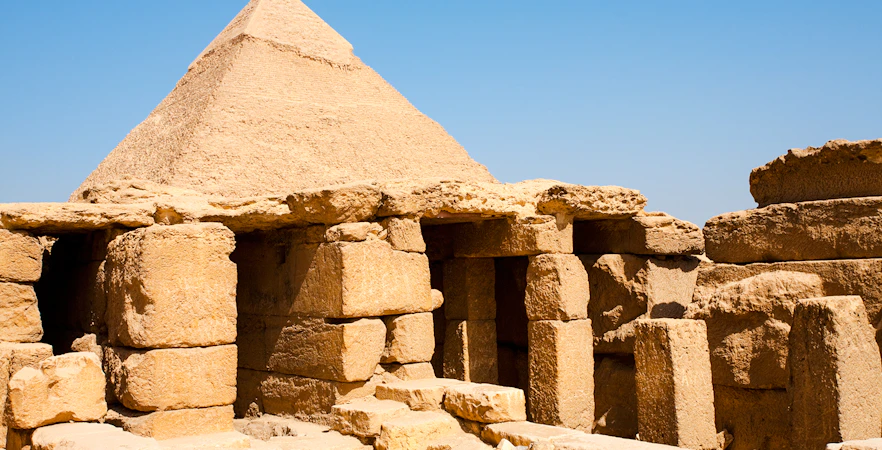
Khafre Pyramid funerary temple ruins in Giza, Egypt, under a clear blue sky.

Know before you visit the Pyramids of Giza

Facilities - Visit pyramids of giza
  • Cloakrooms & lockers: Available at the visitor center for storing bags, large items, and valuables.
  • Information desks: Staffed with guides who can answer questions and provide maps in multiple languages.

  • Restrooms: Located near both main entrances, the Solar Boat Museum, and select points inside the site.
  • Prayer rooms: Provided near the visitor center for Muslim visitors.
  • Souvenir shops: Sell local crafts, papyrus art, miniature pyramid replicas, and other gifts near entrances and along main paths.
  • ATMs: Limited machines are available near the entrances; carrying cash in Egyptian pounds is recommended.
  • First-aid services: Staffed first-aid points at the visitor center for medical assistance.
  • Wheelchair access: Main entrance and visitor center are wheelchair-friendly; site terrain can be uneven and sandy. Wheelchairs are available on request.
  • Seating & shade: Shaded rest areas and benches located near key viewpoints.
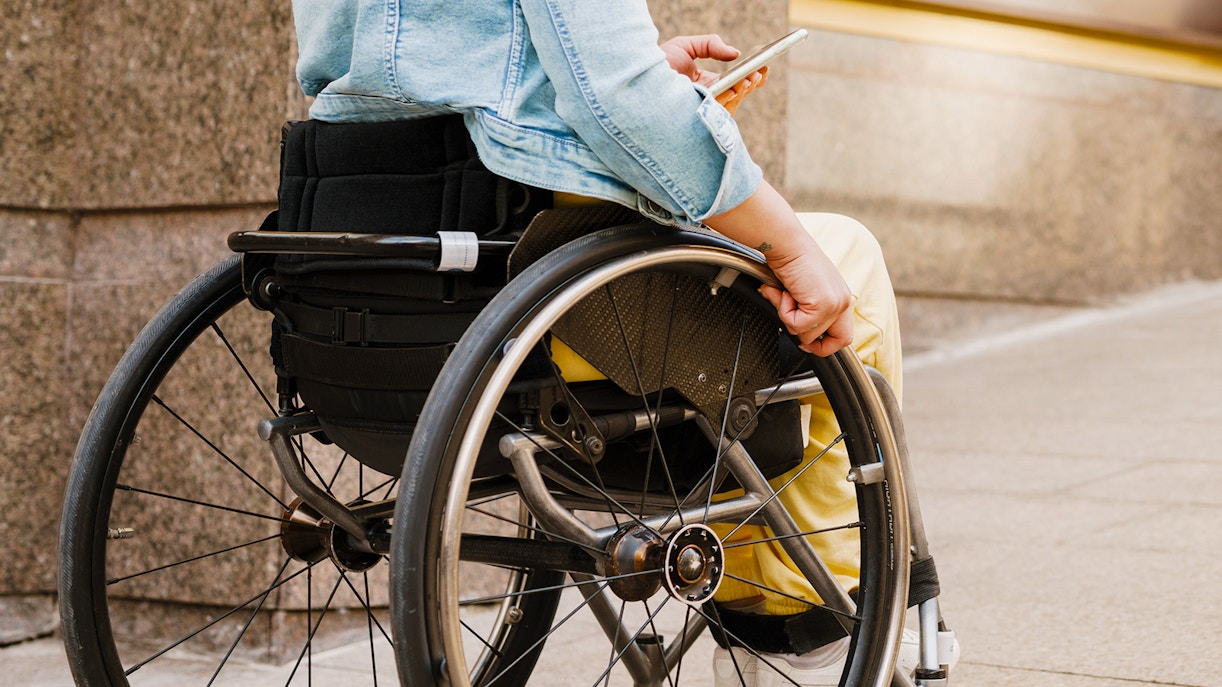
Girl in a wheelchair holding a smartphone on a city sidewalk.
  • Entrances: Both the Main (North) Entrance and Sphinx (East) Entrance have level access suitable for most visitors.
  • Lighting: Limited artificial lighting inside the site; natural daylight is primary, so mobility can be harder near closing hours.
  • Visitor center: Fully accessible with ramps, wide doorways, and wheelchair-friendly restrooms.
  • Pathways: Main approach roads are paved, but interior site terrain is uneven, sandy, and may be challenging for wheelchairs, strollers, or those with mobility issues.
  • Wheelchair rental: Available at the visitor center; advisable to bring a companion for assistance in sandy areas.
  • Viewing points: Some key viewpoints, such as near the Great Pyramid and the Sphinx, have accessible approaches.
  • Transport inside the site: Horse-drawn carriages and camel rides are available but not suitable for all visitors; no dedicated shuttle service within the complex.
  • Signage: Bilingual signs (Arabic/English) mark routes and points of interest for easier navigation.
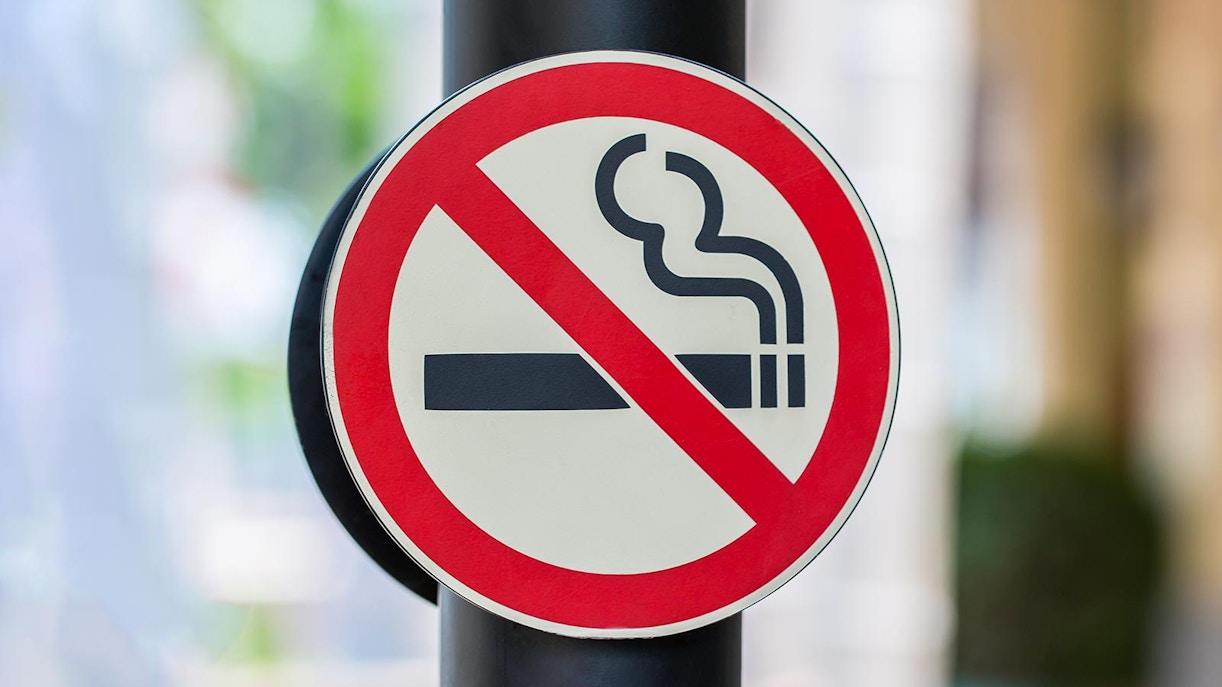
No smoking sign on a pole in an outdoor setting.
  • No climbing on any of the pyramids or monuments—strictly prohibited for safety and preservation.
  • No smoking inside museum areas and near ancient structures.
  • Drone use is not allowed without special government permits.
  • Stay on marked paths and respect roped-off or restricted zones.
  • Personal photography is allowed; tripods, professional cameras, or commercial shoots require permits.
  • Dispose of waste in designated bins; keep the site clean.
  • Do not touch ancient stone surfaces; never deface or remove any artifacts.
  • Use only licensed camel and horse handlers; treat animals humanely.
  • Keep your entry ticket handy for inspection at various points.
  • Separate tickets required for the Sound & Light Show; entry only at specified times.
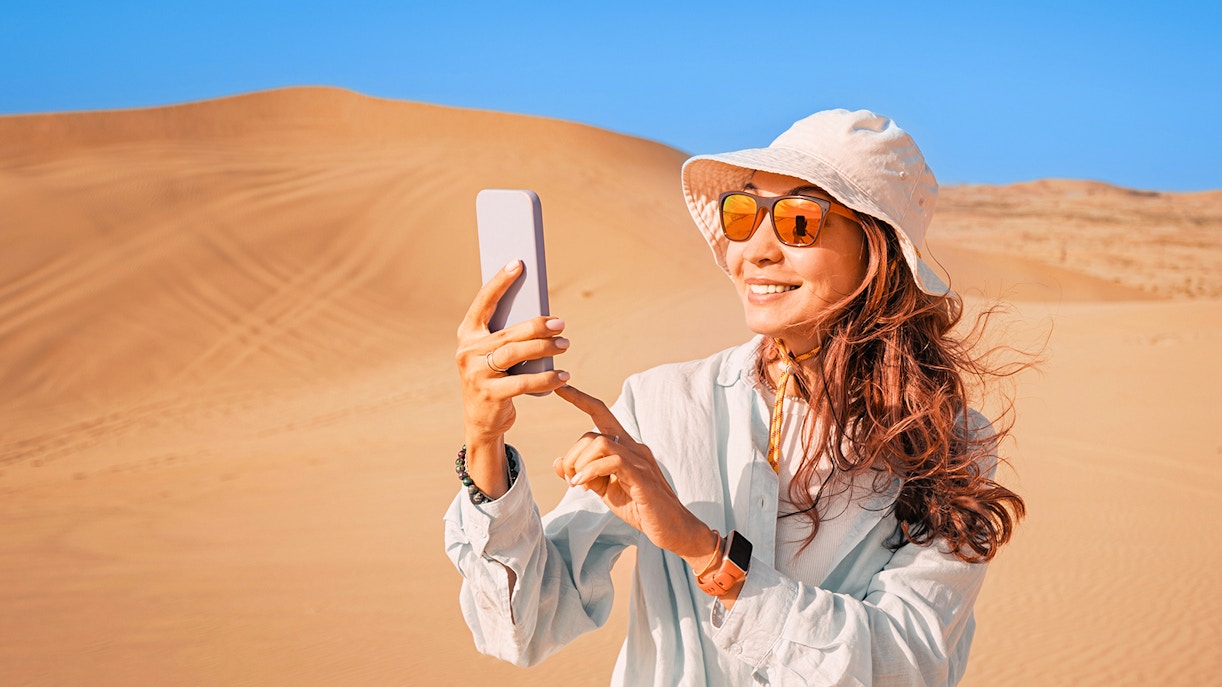
Woman in desert wearing sunglasses and hat, taking a photo with smartphone.
  • Lightweight, breathable clothing to stay cool in the desert heat.
  • A scarf or shawl is useful for extra sun protection or visiting nearby religious sites.
  • Modest attire (shoulders and knees covered) out of cultural respect.
  • Comfortable closed-toe shoes suitable for walking on sand, gravel, and uneven terrain.
  • Sun protection such as a wide-brimmed hat, sunglasses, and sunscreen.
  • Layered clothing in cooler months (October–April) for early mornings and late afternoons.
Where to eat at the Pyramids of Giza?
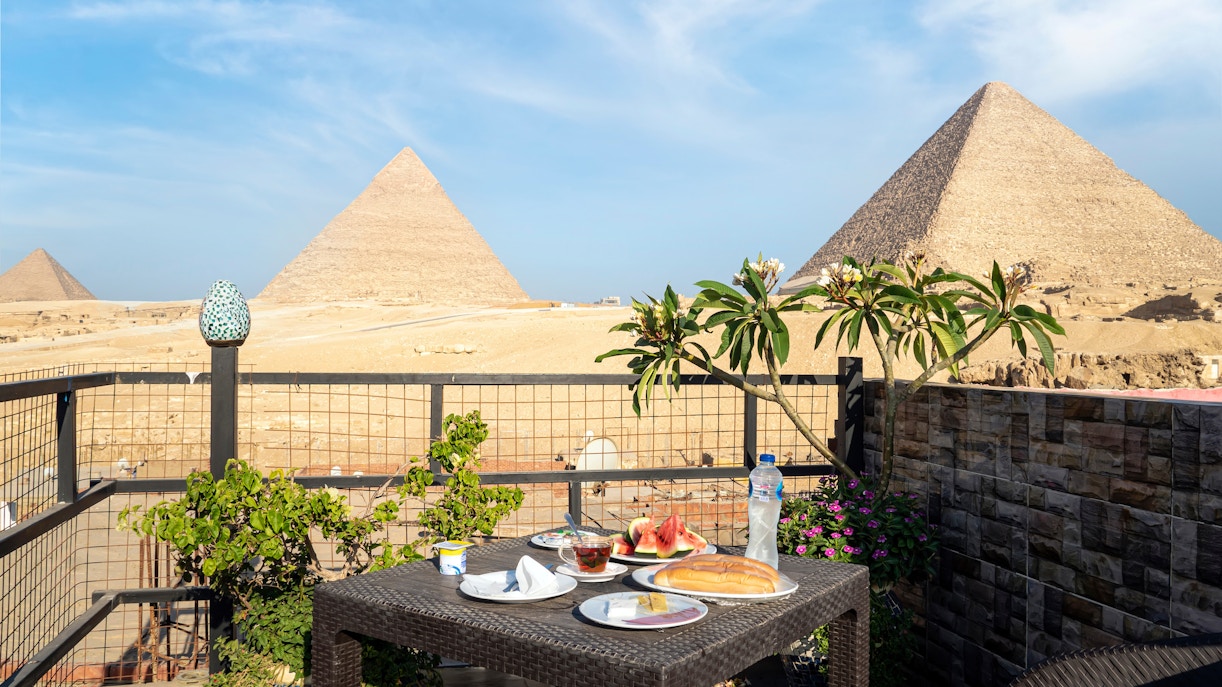
  • Khufu’s Restaurant (Modern Egyptian Cuisine): Upscale dining inside the Giza Plateau with panoramic pyramid views, blending traditional recipes with modern presentation.
    Signature dish: Sea bass with mefatela.
  • 9 Pyramids Lounge (International & Middle Eastern): Casual yet scenic spot overlooking all nine pyramids, perfect for a relaxed meal with unbeatable views.
    Signature dish: Mixed grilled meat platter.
  • 139 Pavilion (Egyptian, International, Fusion): Elegant restaurant with garden and pyramid views, serving refined local and global dishes.
    Signature dish: Lamb shank with oriental rice.
  • Koshary Hekaya (Traditional Egyptian Street Food): Popular local eatery specializing in Egypt’s national comfort food, hearty and budget-friendly.
    Signature dish: Classic Egyptian koshary.
  • El Dar Darak (Egyptian & Middle Eastern): Friendly, home-style restaurant known for generous portions and authentic flavors.
    Signature dish: Grilled kofta with tahini salad.
Attractions near the Pyramids of Giza
  • Egyptian Museum: Home to the world’s most important collection of pieces of ancient Egyptian artifacts. 
    Distance from the Pyramids: 2 km
  • Khan El-Khalili: Cairo’s vast bazaar is the best place to buy any kind of souvenir.
    Distance from the Pyramids: 2.5 km
  • Coptic Museum: An art museum that houses Coptic art from the earliest days of Christianity.
    Distance from the Pyramids: 5 km
  • Cairo Citadel: Walk through the castle that was home to Egypt’s rulers for 700 years, and visit its mosques and museums.
    Distance from the Pyramids: 2 km

Practical tips

  • Book Great Pyramid interior tickets before you arrive, not on the day. The 300 daily slots sell out during October through April, sometimes weeks ahead on busy weekends. Buy online via egymonuments.com, which allows you to choose a session time. Gate machines sometimes run out of interior add-on tickets.
  • Arrive at 7am on a weekday. The 90 minutes after opening are the least crowded. Large guided groups reliably arrive between 9am and 10am, at which point the main monuments become busy. At 7am on a Tuesday or Wednesday, you can photograph the Great Pyramid with no crowds.
  • Bring 1.5 to 2 litres of water per person. There is virtually no shade between monuments. From May through September this is essential. October through April it still matters, particularly for a full visit. The 9 Pyramids Lounge and entrance area cafes sell drinks, but at tourist prices.
  • Do not accept items from strangers. The most common approach near both entrances is someone handing you a "free" postcard, souvenir, or headscarf then demanding payment once you have accepted it. Decline anything offered you did not request. A firm "no thank you" and continuing to walk is all that is needed.
  • Agree camel and horse ride prices before you mount. At the Panoramic Viewpoint, establish the price, the duration, and the exact return point before the ride begins. A typical 30-minute ride costs 300 to 500 EGP. If no price is agreed in advance, you will be quoted an arbitrary sum at the end.
  • The shuttle bus does not always loop back to the Sphinx Gate. If you entered via the Sphinx Gate, keep track of your position on the plateau. Walking back east from the Sphinx area to the Sphinx Gate takes around 15 minutes and is more reliable than waiting for a shuttle to take you back there.
  • Card payment is standard. The vast majority of Egyptian tourist sites now operate on card-only payment. ATMs at the site are limited and not always operational. A Visa or Mastercard removes the need to carry large amounts of cash. Carry some small bills for camel rides, tips, or small purchases from local vendors.

Frequently asked questions about visiting the Pyramids of Giza

The Main Entrance (north) is best for a full tour, while the Sphinx Entrance (east) is ideal if you want to begin near the Sphinx.

More Reads