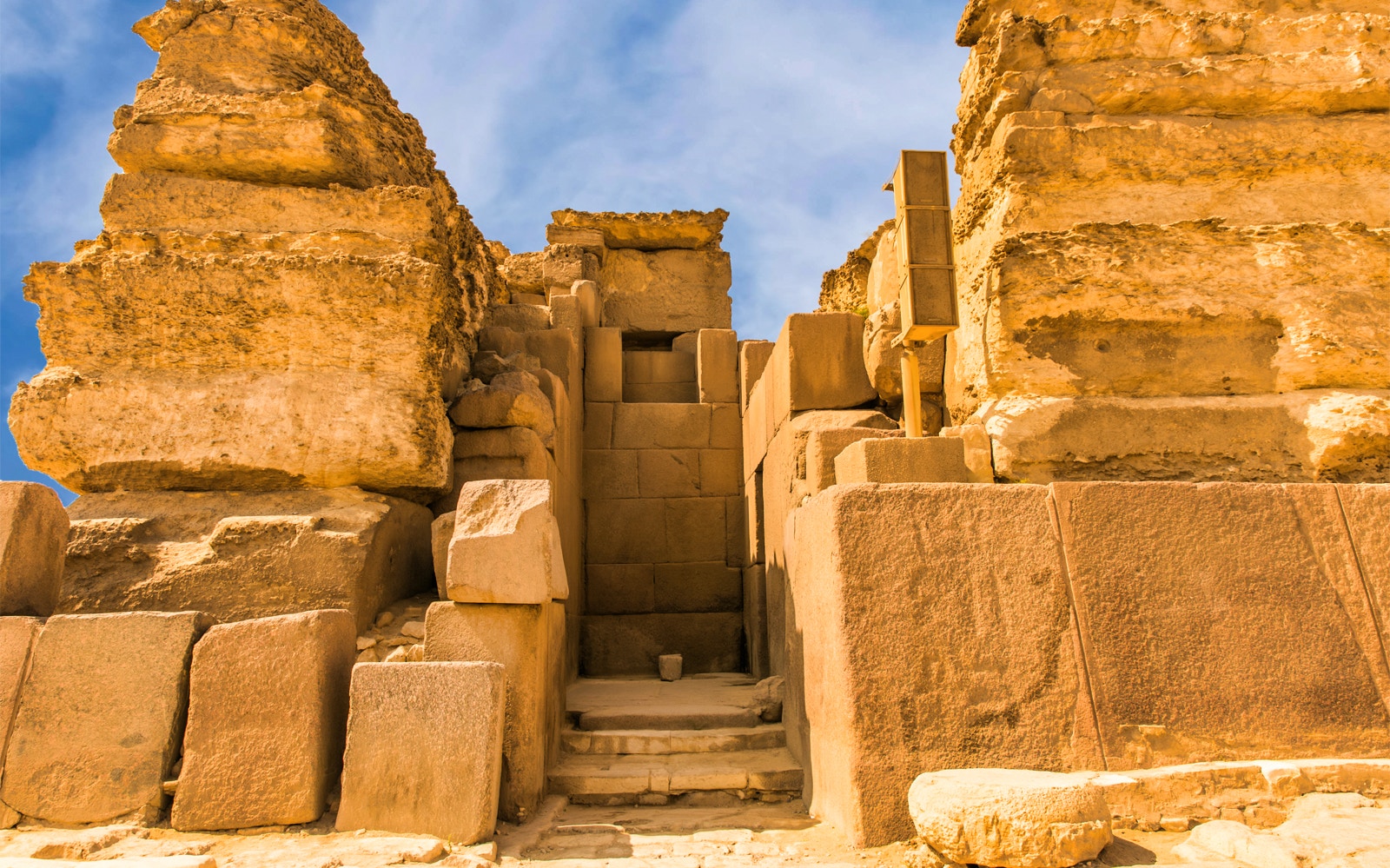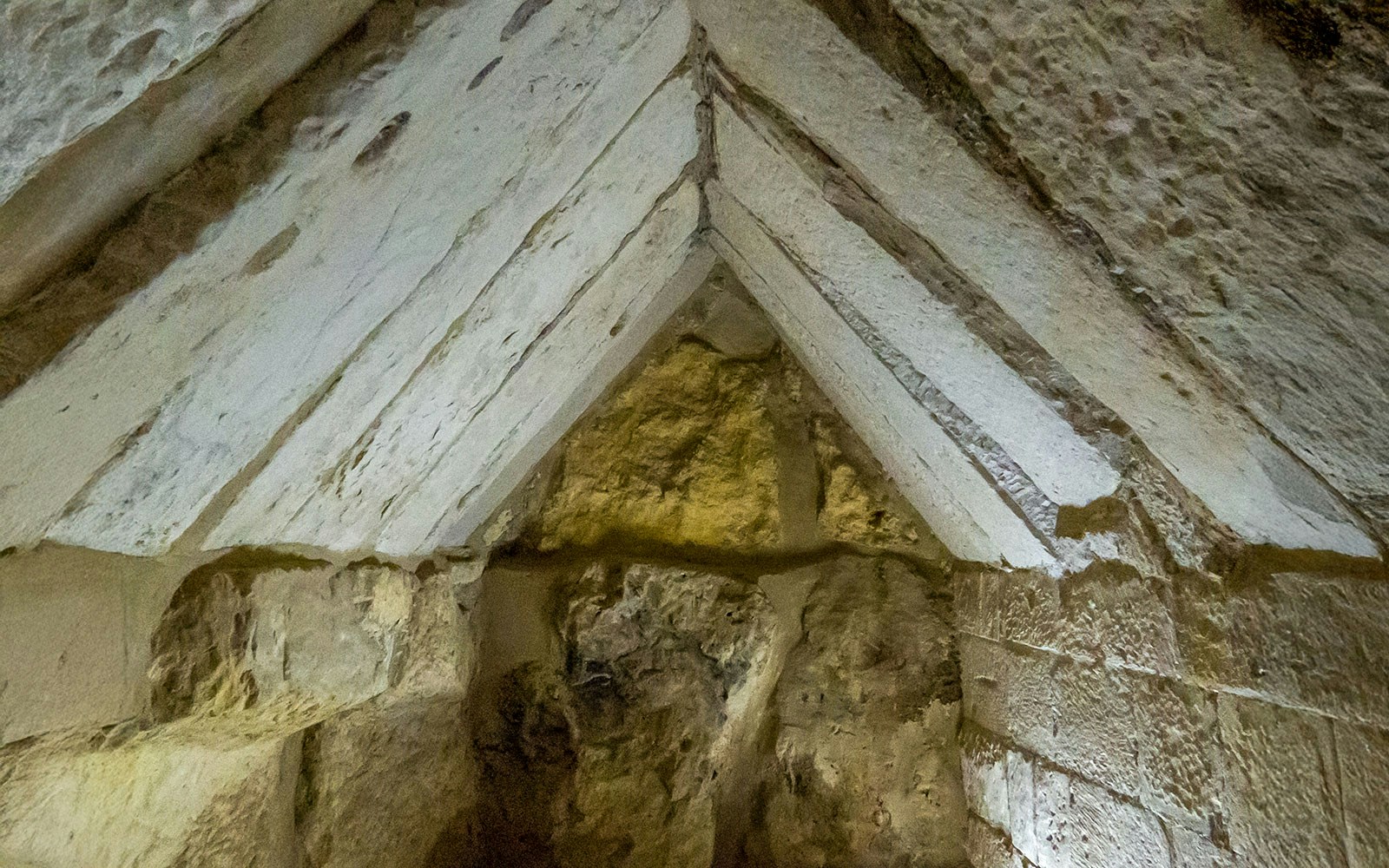
- Inside the Great Pyramid: With an extra ticket, you can climb steep passages into the King’s Chamber. Guests note it’s hot, narrow, and empty—but unforgettable for pyramid enthusiasts.
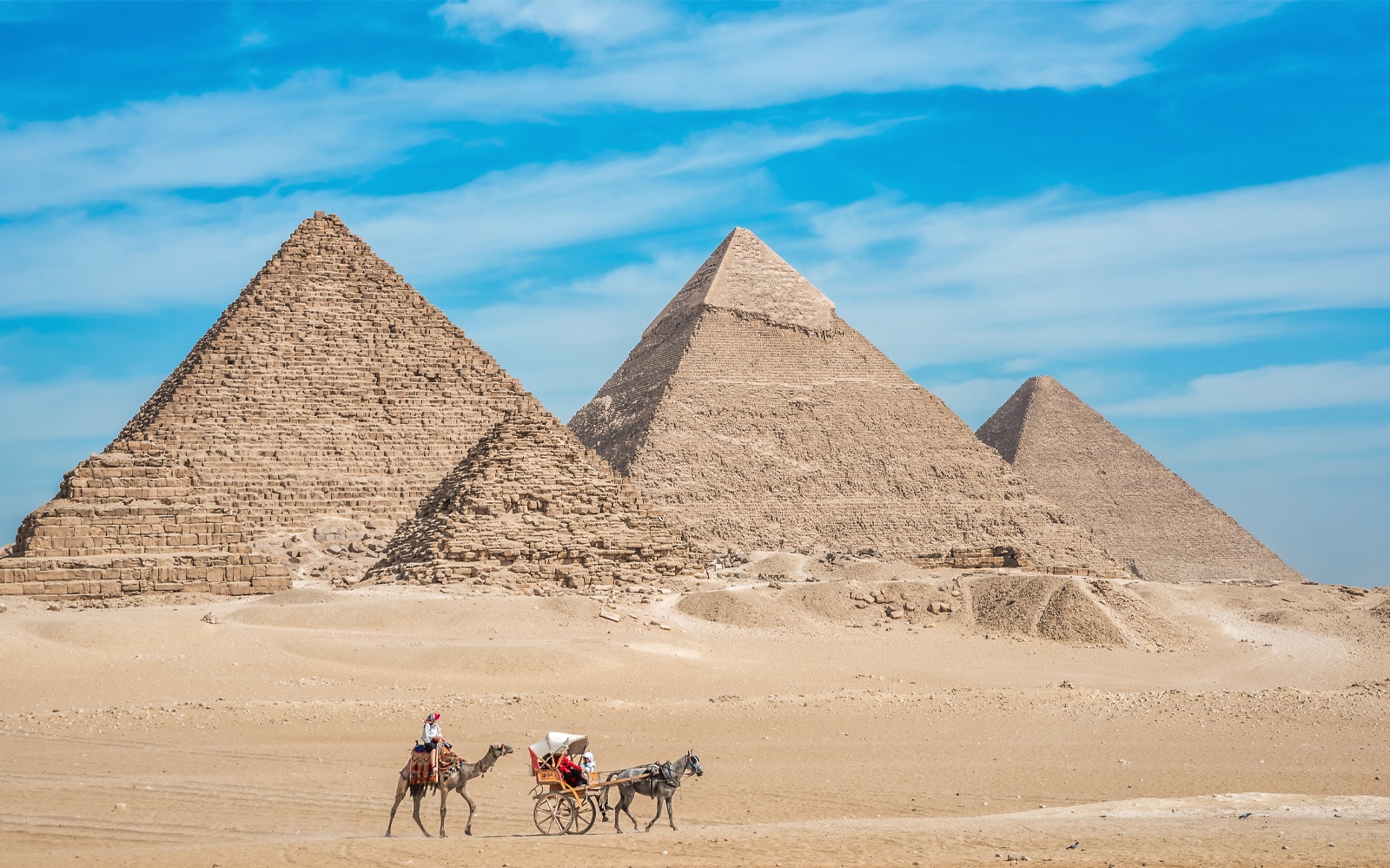
- Panoramic viewpoints: The complex offers unbeatable angles of all three pyramids together, especially magical at sunrise or sunset.
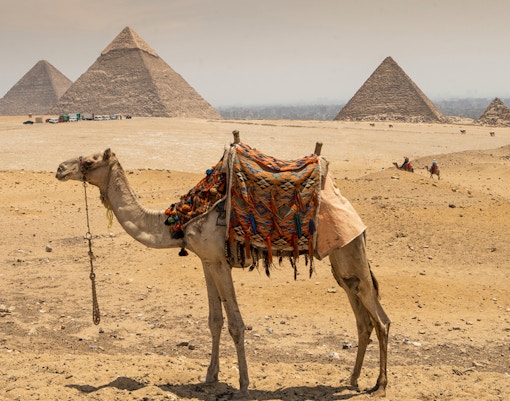
- Camel rides & photos: Touristy but fun—especially for families. Travelers recommend setting a clear price before hopping on.
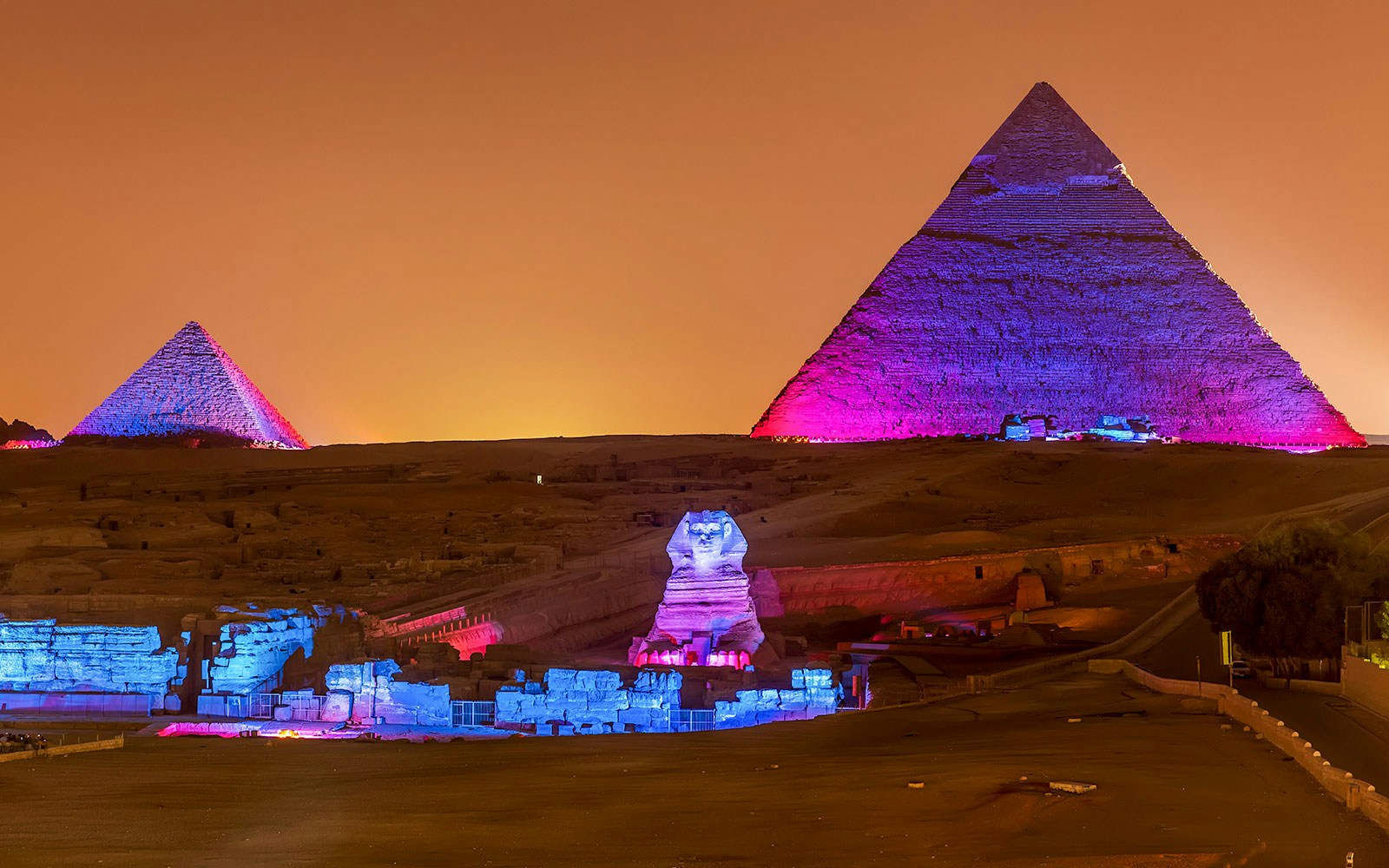
- Light & sound Show: The nightly spectacle of projections and narration adds drama to the site after dark.
- Local cafes: Several rooftop spots nearby serve Egyptian food with postcard-perfect pyramid views.
Did you know?
The Pyramid of Giza was constructed for Pharaoh Khufu (Cheops) around 2560 BCE and originally stood at 146.6 meters, making it the tallest man-made structure for over 3,800 years.
It is estimated that over 2.3 million limestone and granite blocks, each weighing between 2.5 and 15 tons, were used in its construction.
The pyramid’s sides are almost perfectly aligned with the cardinal points of the compass, showcasing the advanced knowledge of astronomy and mathematics possessed by ancient Egyptians.
Are the Pyramids of Giza worth visiting?
The Pyramids of Giza are Egypt’s crown jewel: the last surviving Wonder of the Ancient World, over 4,500 years old, and still the country’s most visited landmark. Rising from the desert on Cairo’s edge, the pyramids are a blend of ancient mystery, brilliant engineering, and sheer scale that leaves visitors spellbound. Whether you’re here for history, photography, or a once-in-a-lifetime bucket-list moment, the Giza complex delivers.
Why are the Pyramids of Giza a must-visit attraction?

What to see at the Pyramids of Giza

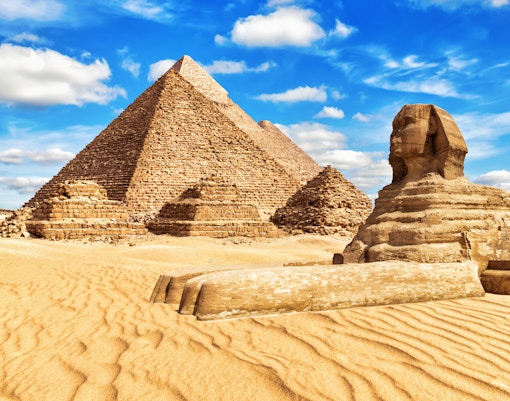
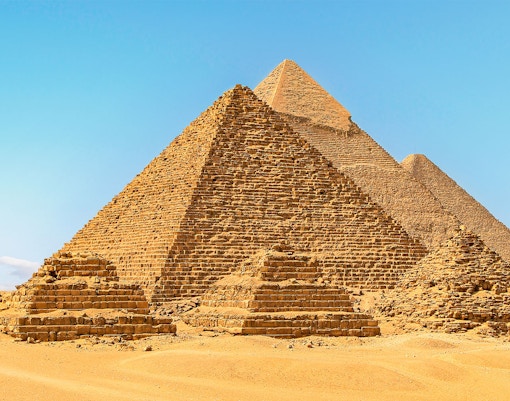
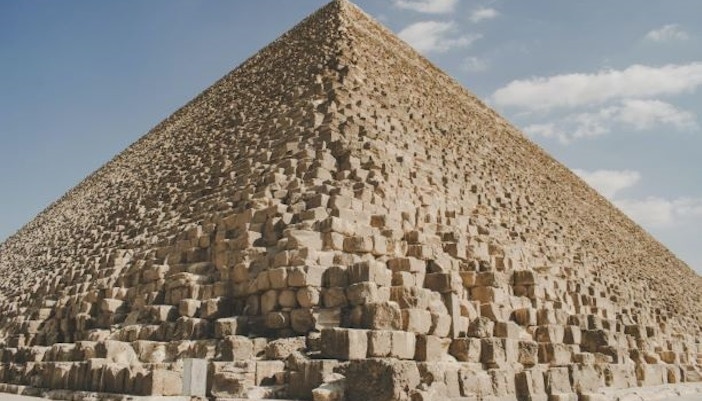
Great Pyramid of Khufu
The largest and oldest of the trio. Pay extra to enter its narrow corridors and stand inside the King’s Chamber, where an empty granite sarcophagus lies.

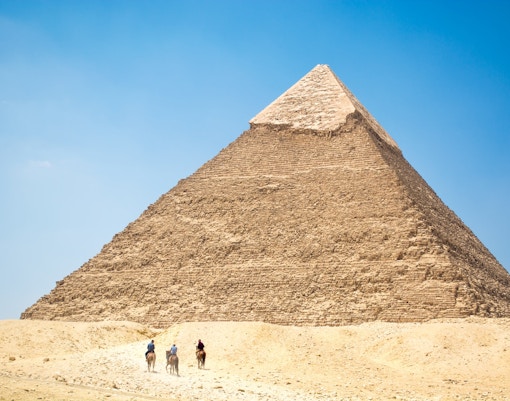
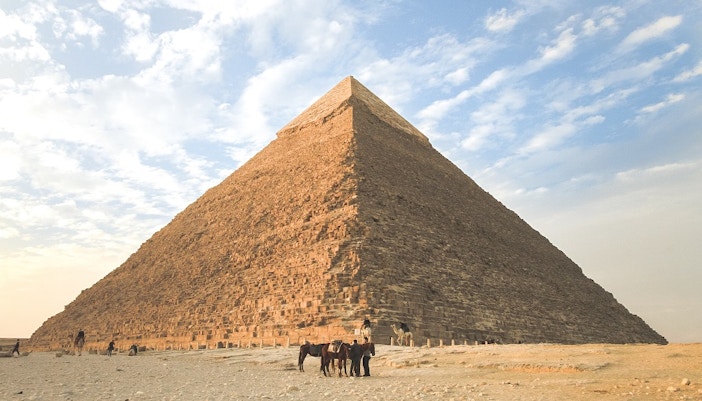
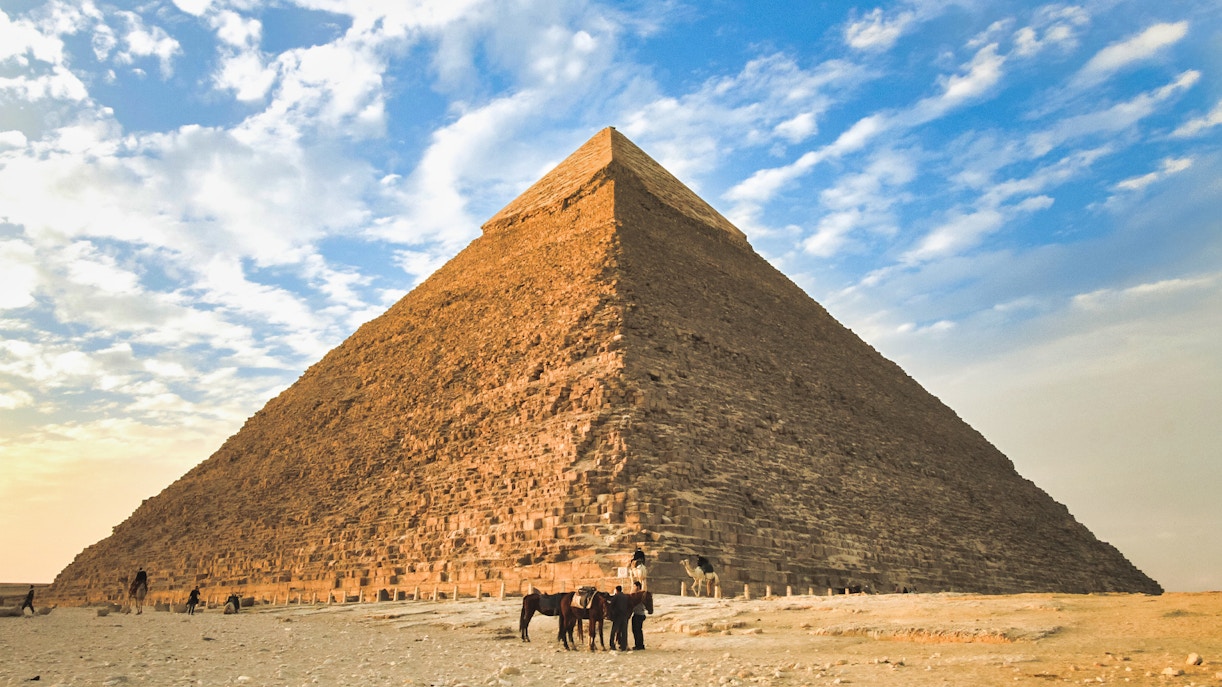
Pyramid of Khafre
Slightly smaller, it’s easy to spot with its limestone cap still visible at the top.

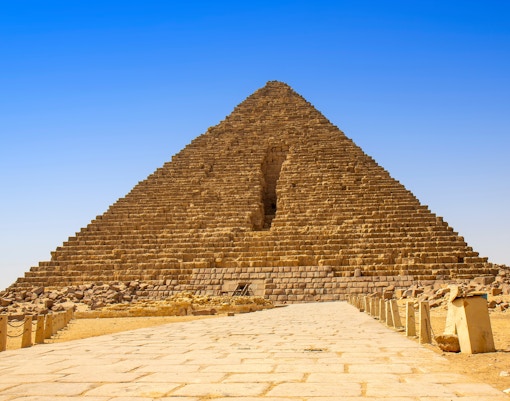
Pyramid of Menkaure
The smallest of the three, flanked by satellite pyramids.

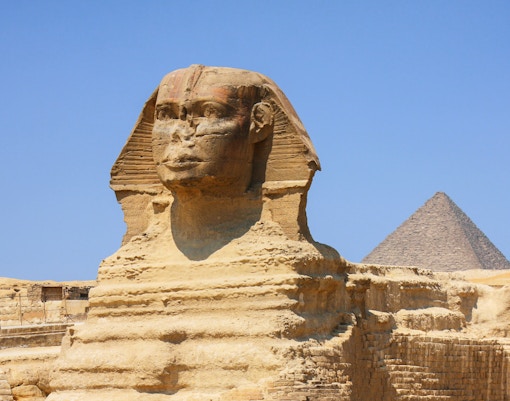
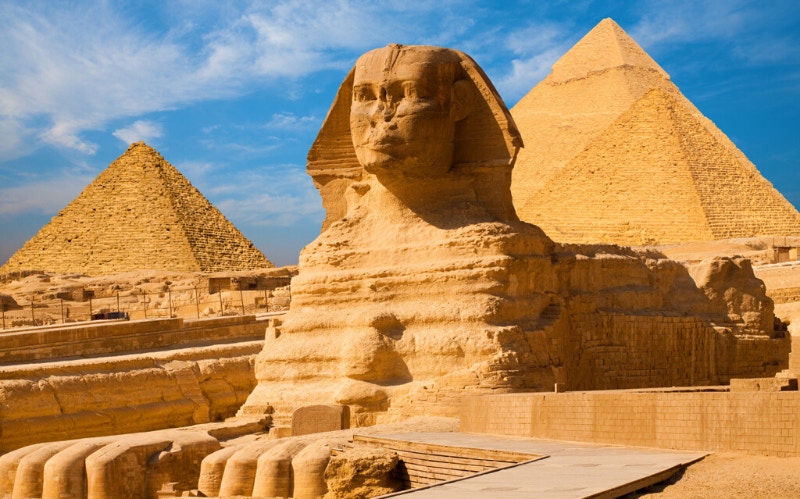
Great Sphinx
This half-lion, half-human guardian remains one of Egypt’s most photographed icons.

Panoramic point
A desert viewpoint where all three pyramids align—a favorite among guides and photographers.

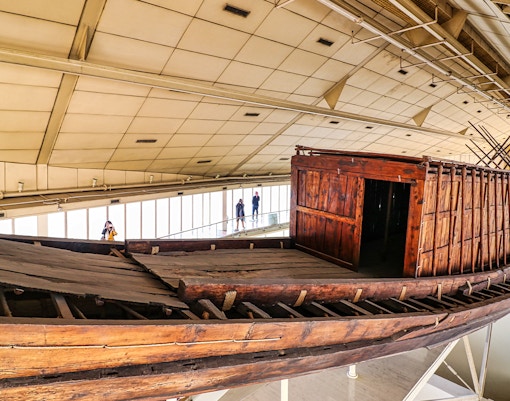
Solar boat (now at GEM)
Khufu’s reconstructed cedarwood shi, once buried for eternity, is today a highlight for history fans.

Camel ride area
A classic desert photo opportunity, though best enjoyed with clear price agreements.
Highlights of the Pyramids of Giza

Climb inside the Great Pyramid
A steep, hot, but unforgettable adventure.


Brief history of the Pyramids of Giza
The pyramids were built during Egypt’s Old Kingdom, around 2600–2500 BC. Khufu’s Great Pyramid came first, followed by the slightly smaller pyramid of his son Khafre, and then Menkaure’s pyramid. They were tombs designed to ensure the pharaohs’ journey to the afterlife.
Over the centuries, they’ve been looted, studied, restored, and marveled at by everyone from Greek historians to modern travelers. Today, they remain the ultimate symbol of ancient Egypt’s genius and ambition.
Who built the Pyramids of Giza?
Forget the old slave myths: archaeological evidence shows the pyramids were built by thousands of skilled laborers, artisans, and farmers working in teams during the Nile’s flood season. Their organized effort, supported by housing villages and supply chains, made this wonder possible.
Architecture of the Pyramids of Giza
The pyramids’ design is deceptively simple but incredibly precise. Originally covered in smooth white limestone casing, the Great Pyramid once gleamed in the sun. Its sides align almost perfectly with the cardinal directions, and the base is nearly square to within centimeters.
Builders used granite from Aswan, local limestone, sledges, and ramps to move colossal blocks into place. Many details remain debated, but the result is a masterpiece of human ingenuity.
Additional information
The pyramids were declared a UNESCO World Heritage Site in 1979. Today, conservation projects, scanning technology, and ongoing research continue to reveal secrets—including hidden voids inside the Great Pyramid.
Frequently asked questions about the Pyramids of Giza
Yes, but only with a separate interior ticket in addition to your Giza complex pass. Spots are limited daily, so it’s best to book your tickets online in advance.
Early mornings and late afternoons are ideal to beat the heat and avoid large crowds. For the most pleasant weather, visit between October and February when Cairo’s winter is cooler and more comfortable.
Plan to spend about 3–4 hours if you’re exploring the Great Pyramid and the surrounding Giza complex. Add extra time if you’re joining a guided tour or visiting the nearby museum.
No, climbing the pyramids is strictly prohibited for safety and preservation reasons. Visitors can only enter the interiors with a ticket or walk around the base to admire their grandeur up close.
Depending on your itinerary and the kind of experiences you want to have, you can choose between half-day or full-day guided tours of the Pyramids of Giza. A half-day tour of the Pyramids of Giza and the Sphinx ranges around $34. You can also choose a half-day tour with a Nile River Felucca boat tour which costs around $40.5. If you love yourself a bit of an adrenaline rush, you can also book a quad biking tour of the Pyramids of Giza. The biking tour allows you to get up close to the monumental structures and appreciate them in all their glory.
Yes, we recommend you book guided tours of the Pyramids of Giza to learn more about ancient Egyptian beliefs and the speculations surrounding the construction of the pyramids. Depending on your itinerary, you can book half-day guided tours to the Pyramids and the Great Sphinx or choose a full-day guided tour of the Pyramids, Sphinx, Saqqara, and Dahsur.
Absolutely! Egyptologist-led tours provide fascinating context, decode hidden features, and help you navigate ticketing and crowds. Many travelers say the stories shared by guides transform the experience completely.
Alongside Khufu’s Great Pyramid, you’ll find Khafre’s and Menkaure’s smaller pyramids, the iconic Sphinx, and the Solar Boat pits. Together, they create one of the world’s most extraordinary archaeological sites.
Without a doubt! Standing before the Great Pyramid is awe-inspiring, and stepping inside is an unforgettable glimpse into history. Reviews consistently call it a once-in-a-lifetime experience.
The Pyramids of Giza are estimated to be approximately 4,500 years old. They were built during the Old Kingdom period of ancient Egypt, with the construction of the Great Pyramid, starting around 2600 BCE. These ancient structures have stood the test of time and continue to be a testament to the remarkable engineering and architectural skills of the ancient Egyptians.
In the present day, it may be difficult to accurately determine the actual height of the Pyramids of Giza owing to their outer casing stones having waned over the centuries. Scholars have estimated that the Great Pyramid is around 146.6 meters. The Pyramid of Khafre is slightly smaller at 136.4 meters and the Pyramid of Menkaure is around 65 meters.
While the Pyramids of Giza are not the most ideal spot to navigate for wheelchair users, there are ramps and elevators to make certain areas more accessible. If you have any special requirements, please check the ticket details for more information on accessibility options and assistance during your visit.
There is no specific dress code that you have to follow when visiting the Pyramids of Giza. However, if you plan to explore the entire area along with the surrounding historical sites, it is best to wear clothing that covers your knees and shoulders. It will also protect you from the scorching heat of the desert. Wear comfortable footwear because you have to cross uneven terrain and rocky surfaces to explore the pyramid interiors.

.jpg?auto=compress%2Cformat&w=702.4499999999999&h=401.4&q=90&ar=7%3A4&crop=faces&fit=crop)