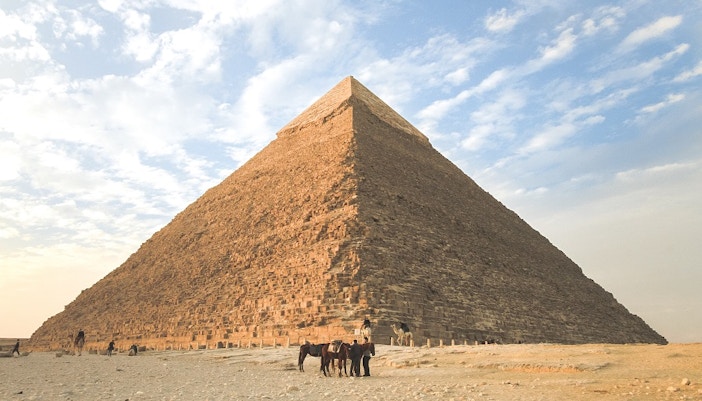
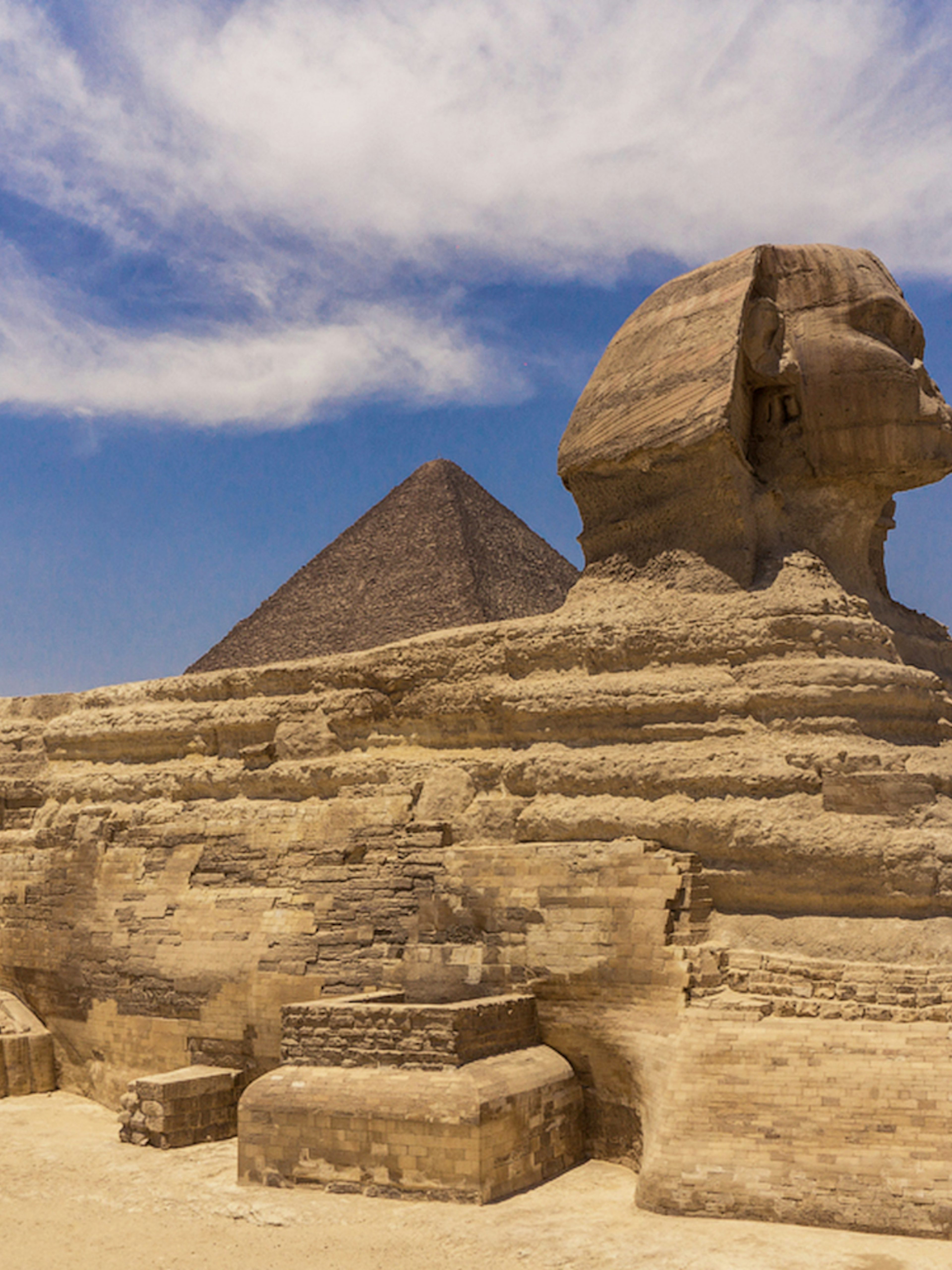
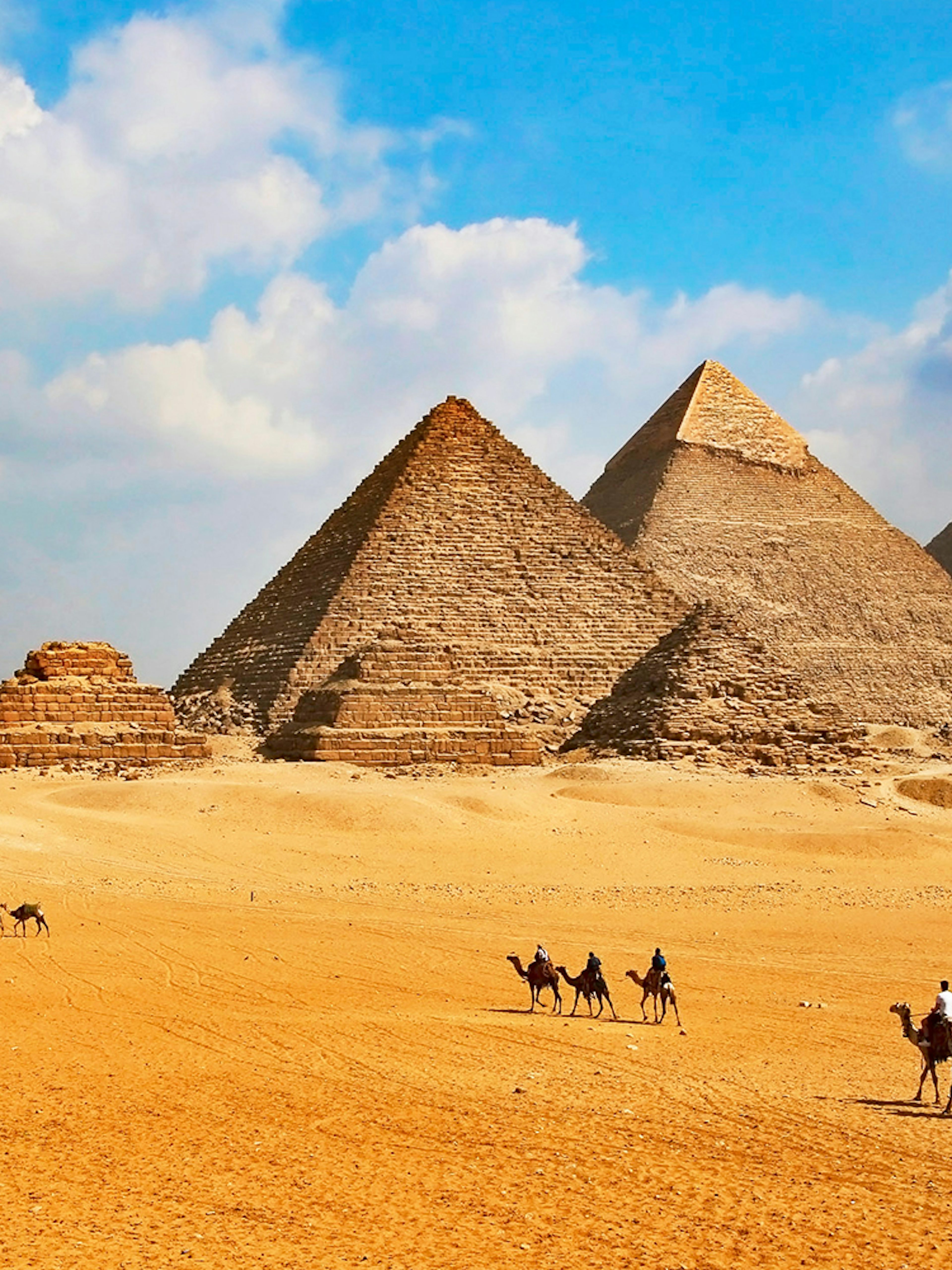
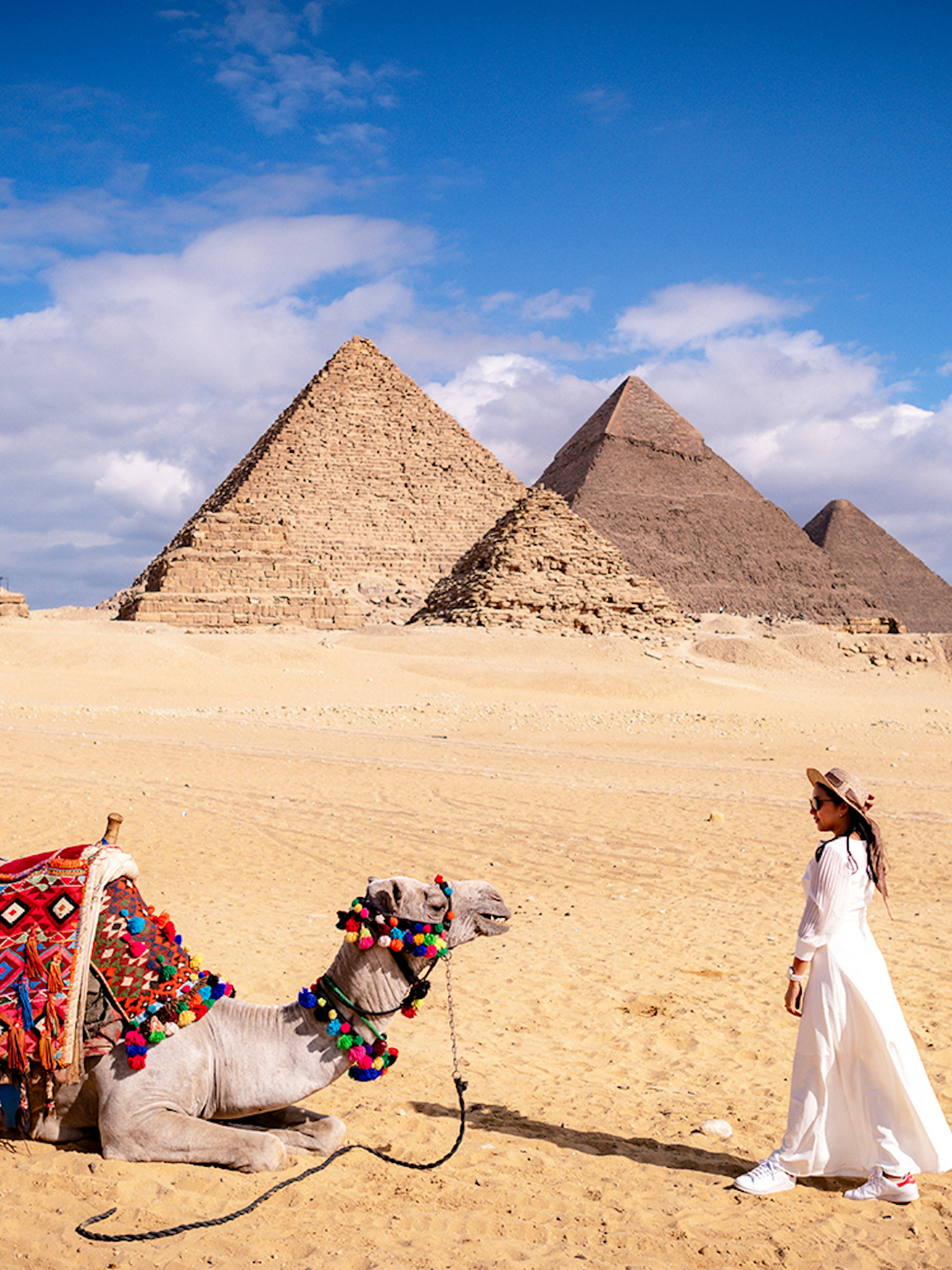
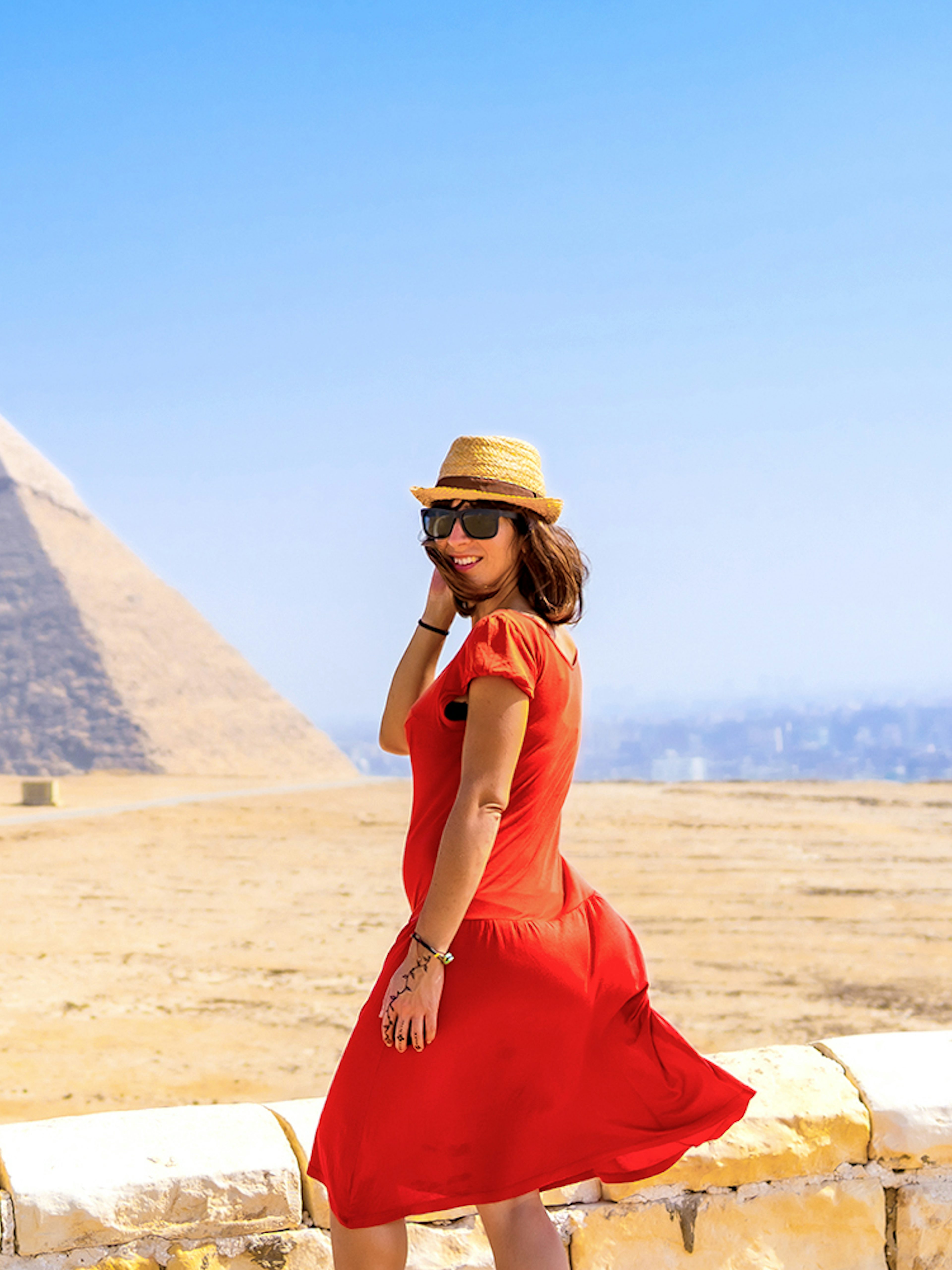
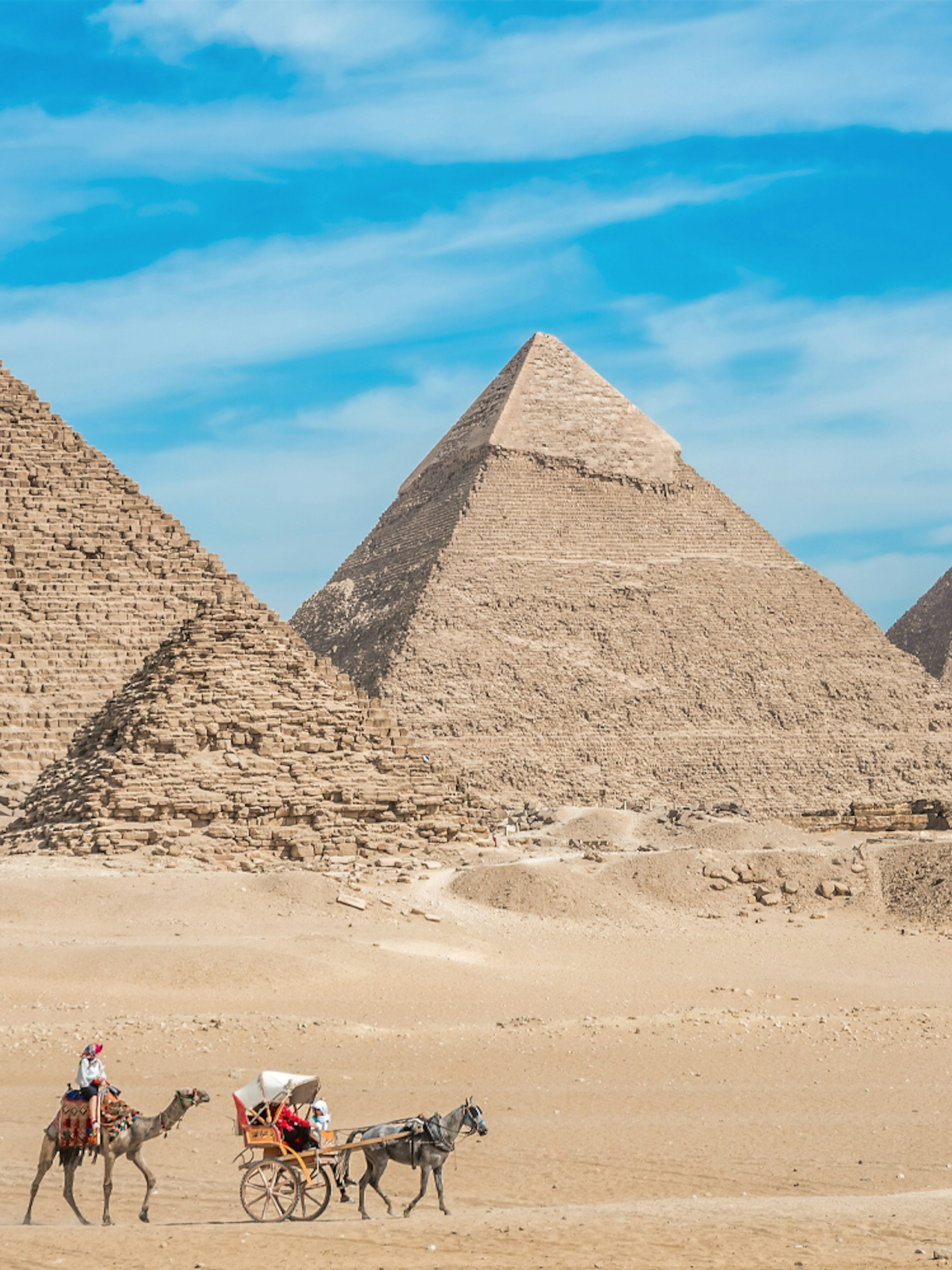
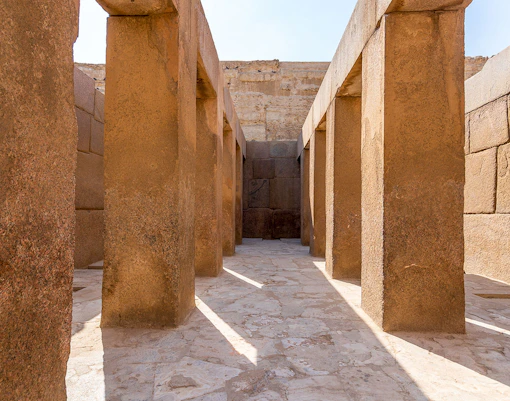
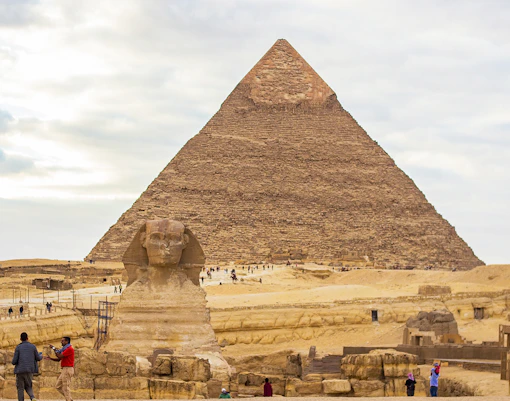
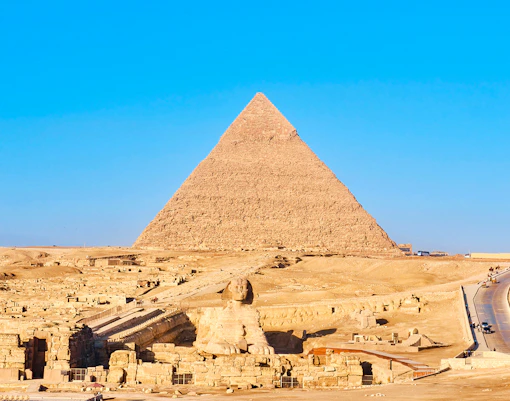
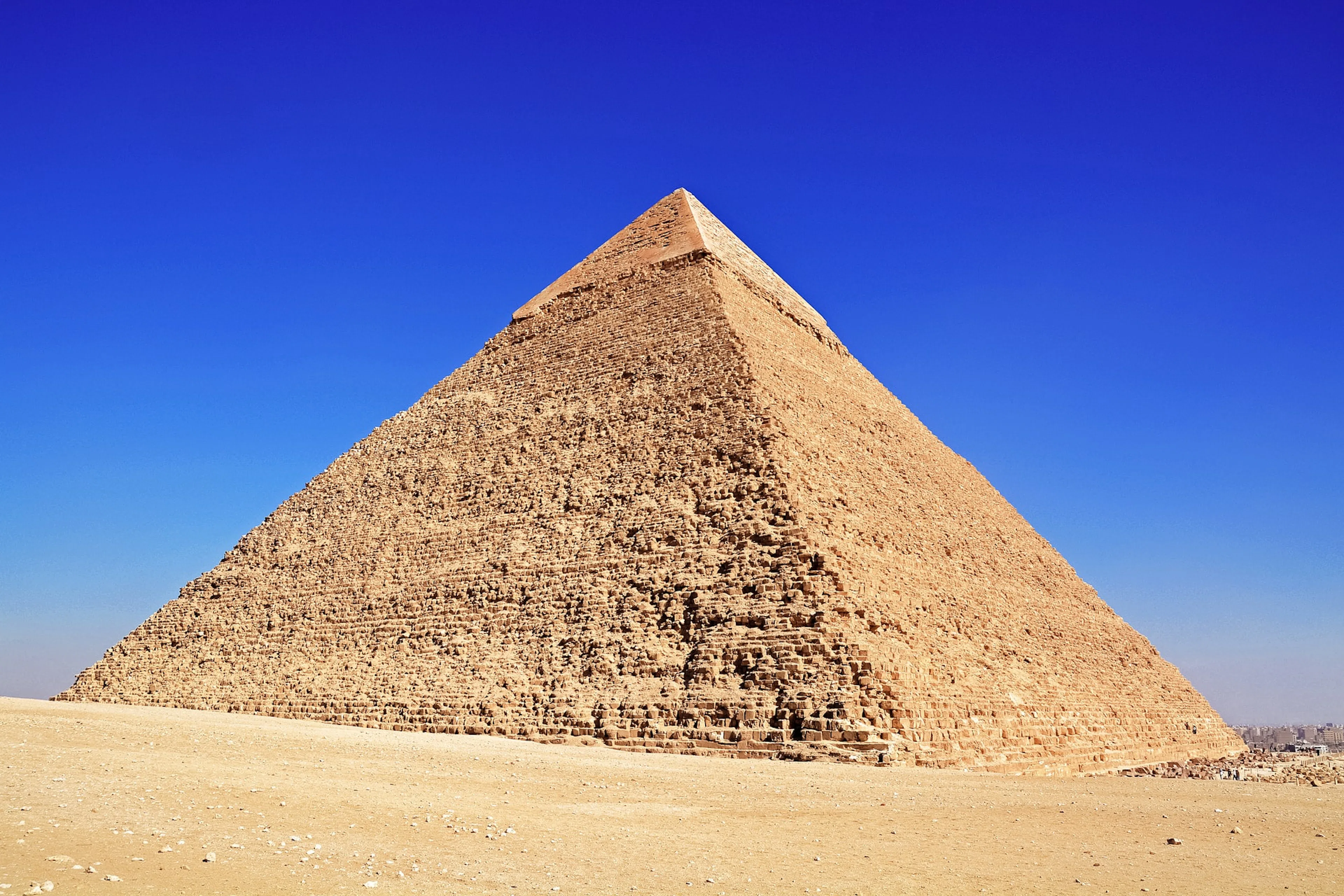
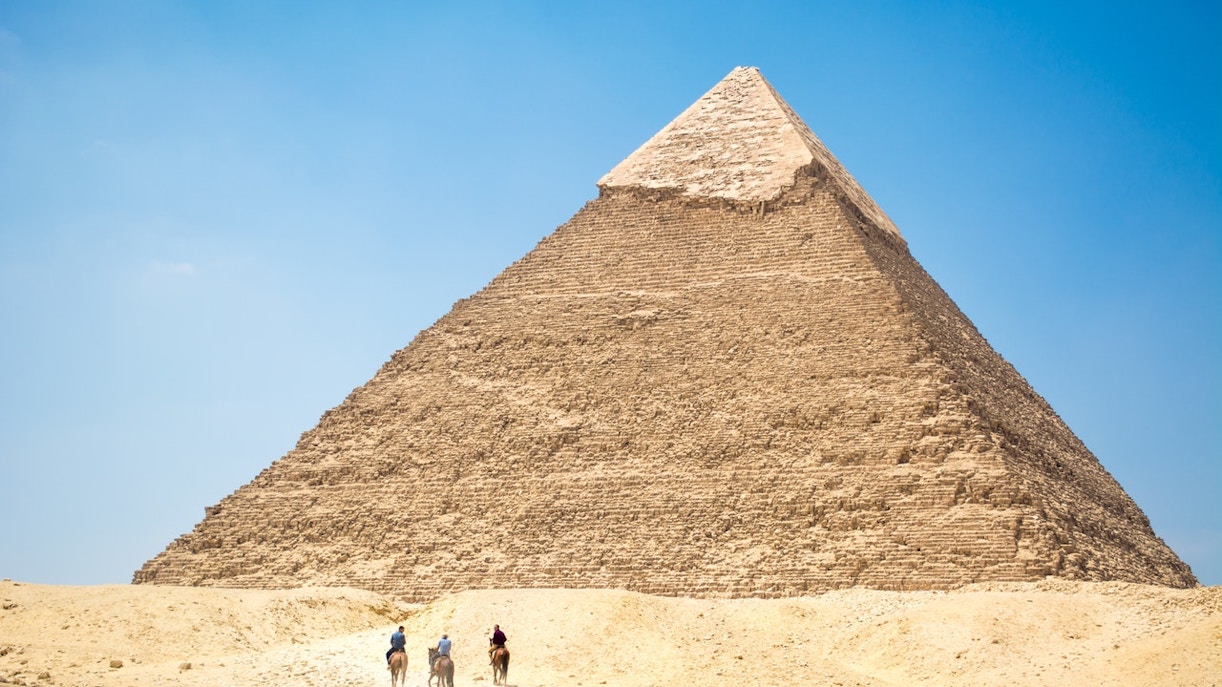
See the second-largest and best-preserved pyramid on the Giza Complex.
Visit the Pyramid of Khafre
What to expect at the Pyramid of Khafre
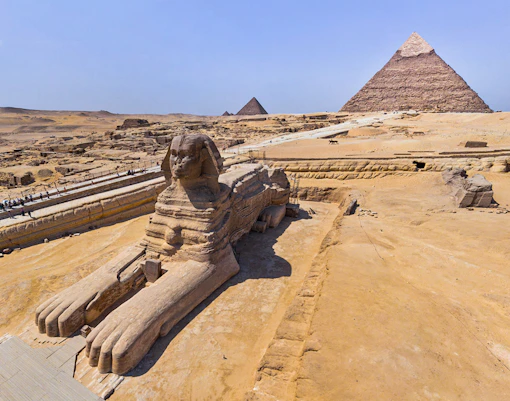
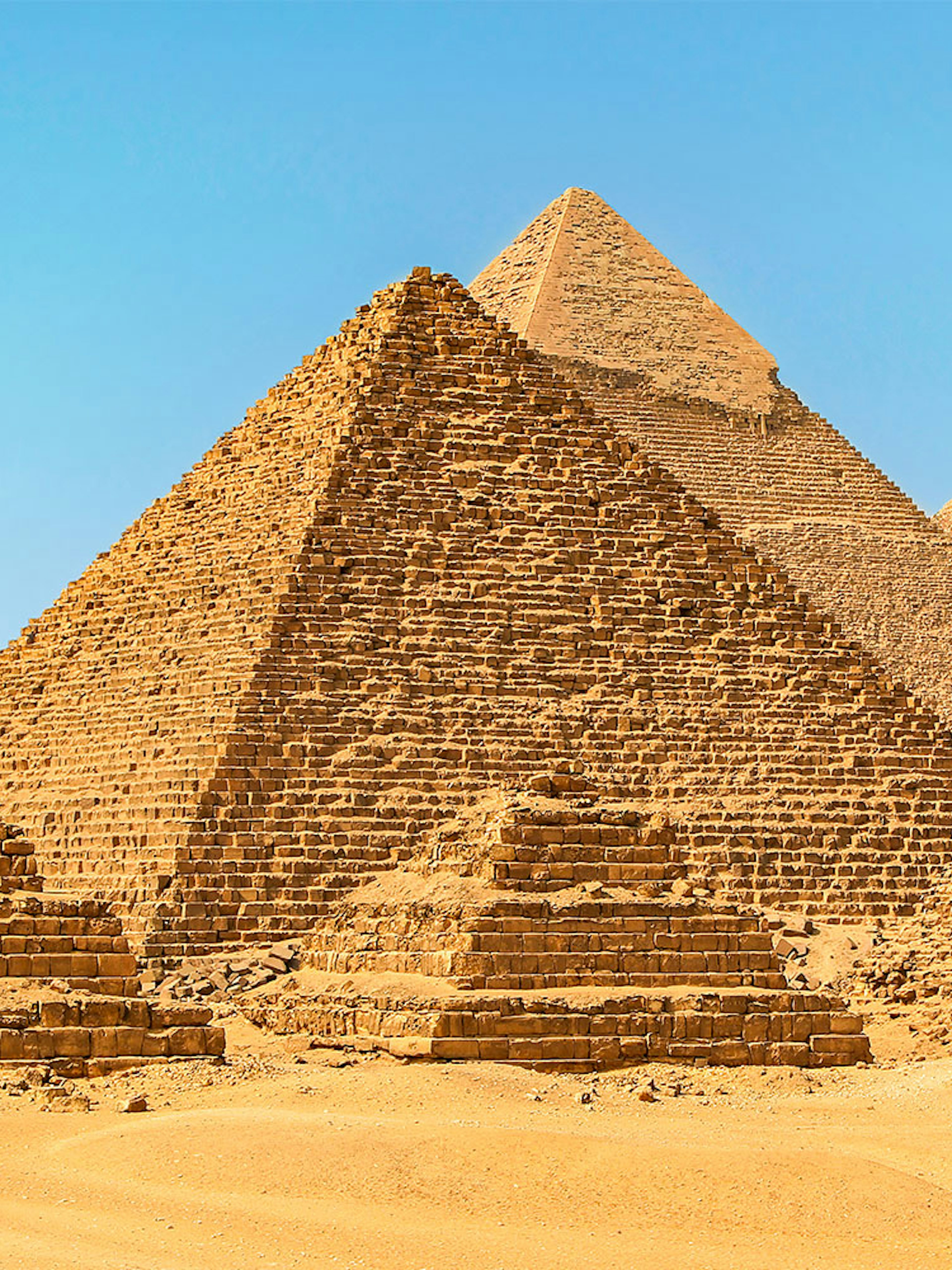
Best preserved pyramid
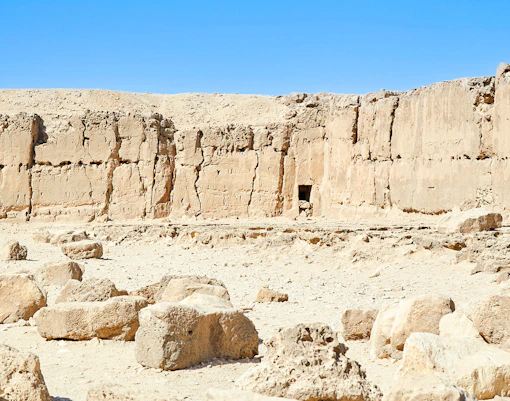
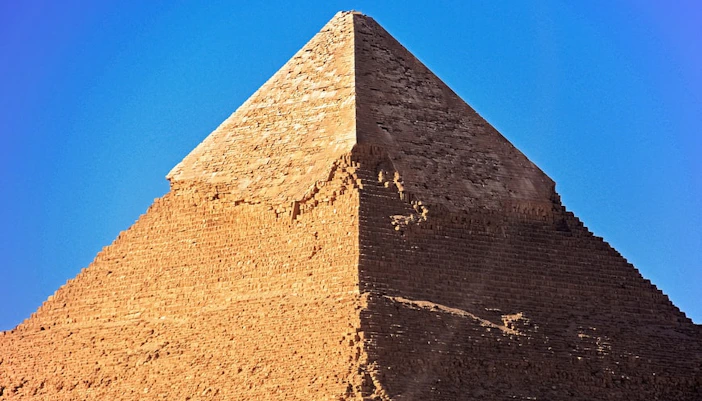
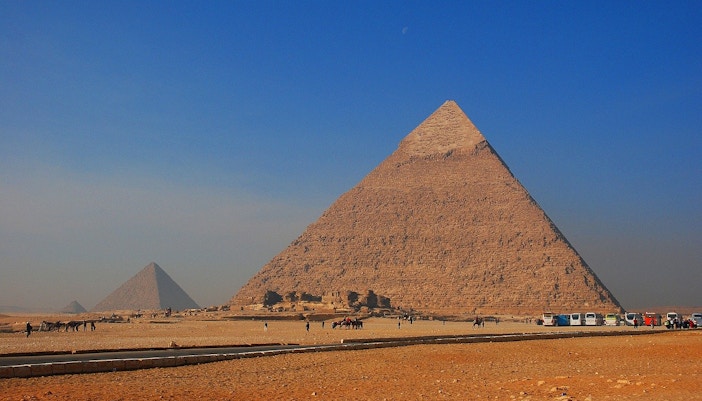
Rare original casing stones
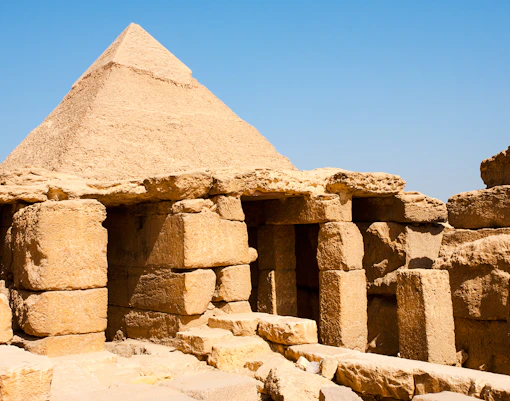
Get close-up photos of the limestone blocks still visible at the apex.

Pyramid entry with separate ticket
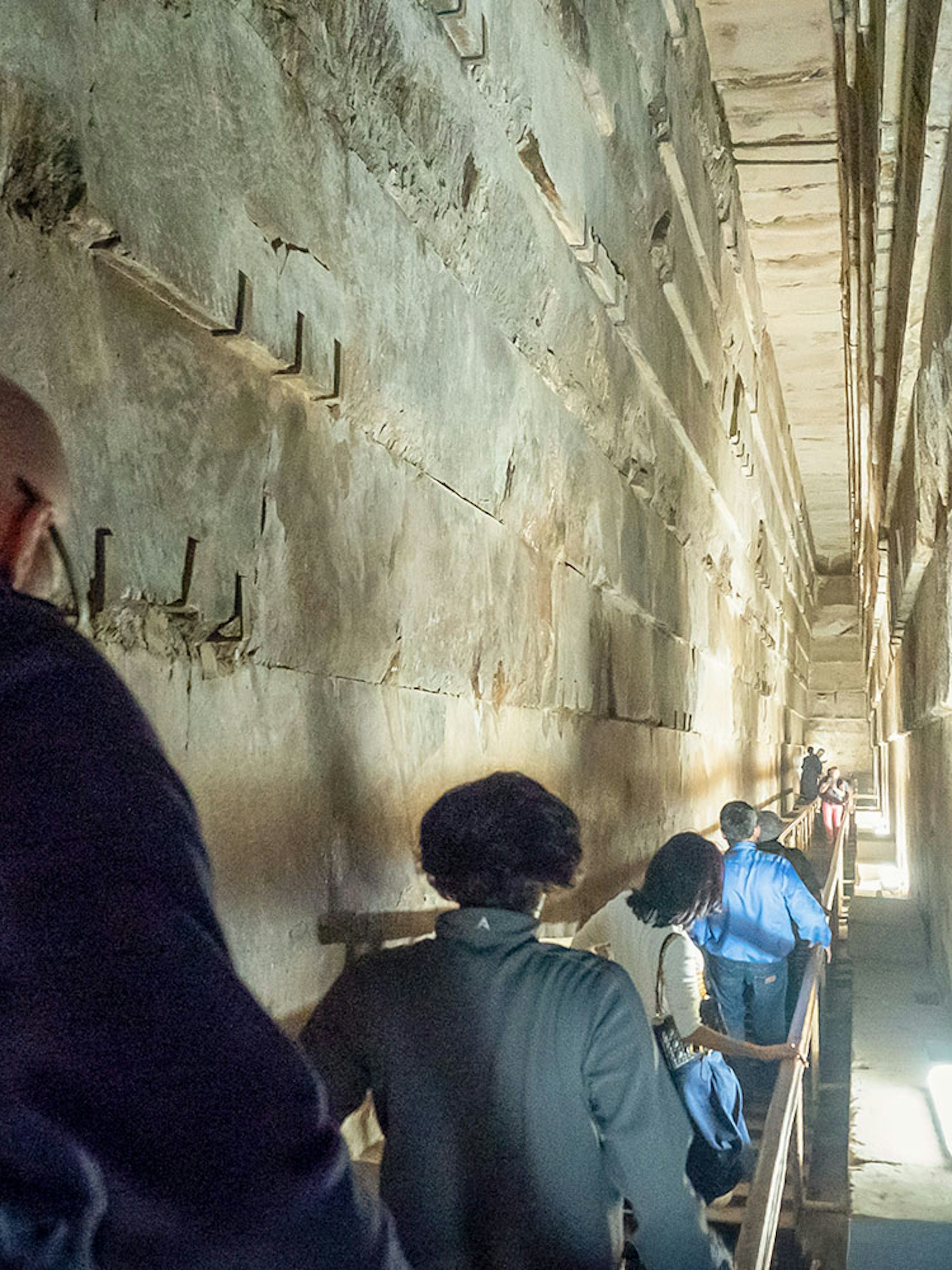
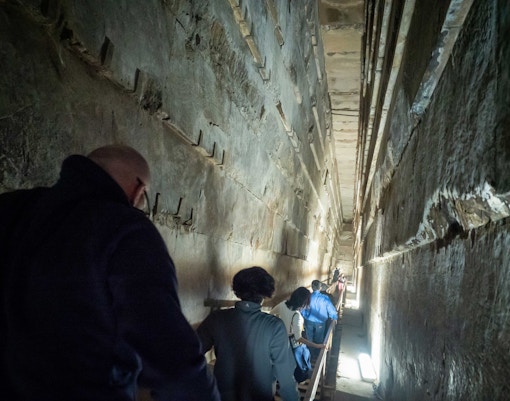
With a separate ticket, descend narrow passages to the burial chamber.

Explore temples & causeway
Walk through Khafre’s Mortuary and Valley Temples and trace the 494-m causeway.

Less-crowded experience
Enjoy a calmer visit compared to the Great Pyramid, giving you space to explore at your own pace.

Perfect photo spots
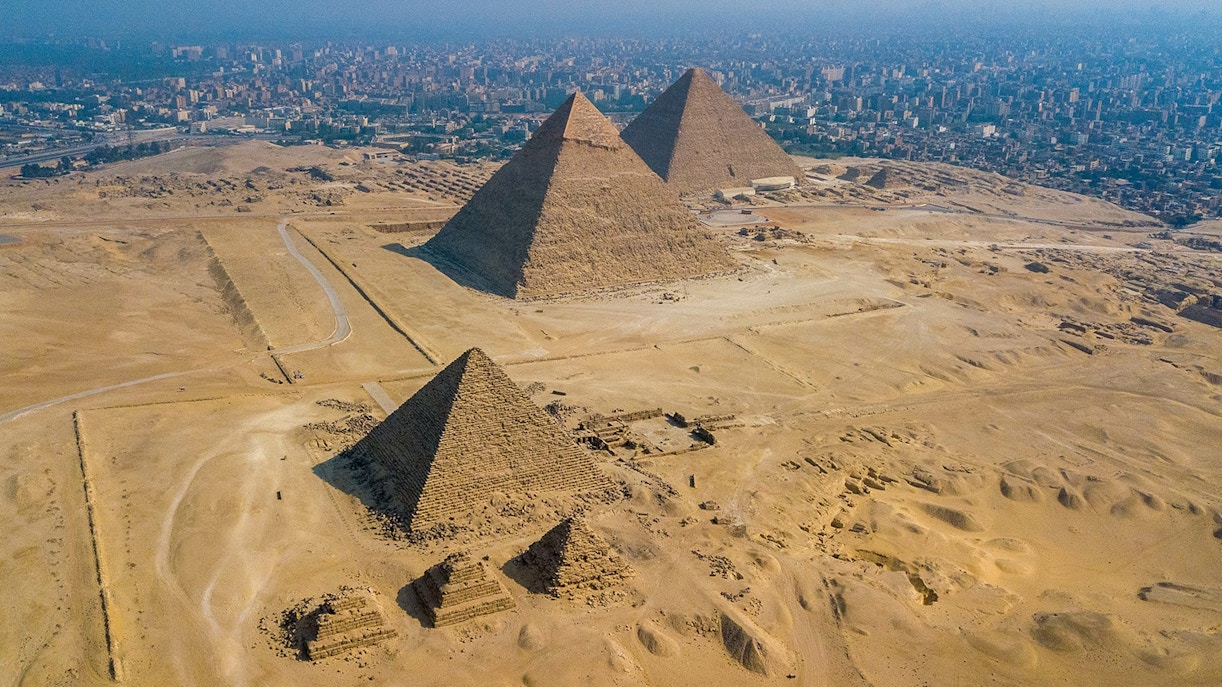
Capture stunning views of Khafre, the neighboring pyramids, and the Great Sphinx from multiple iconic vantage points.
Why visit the Pyramid of Khafre

Egypt’s second-largest pyramid
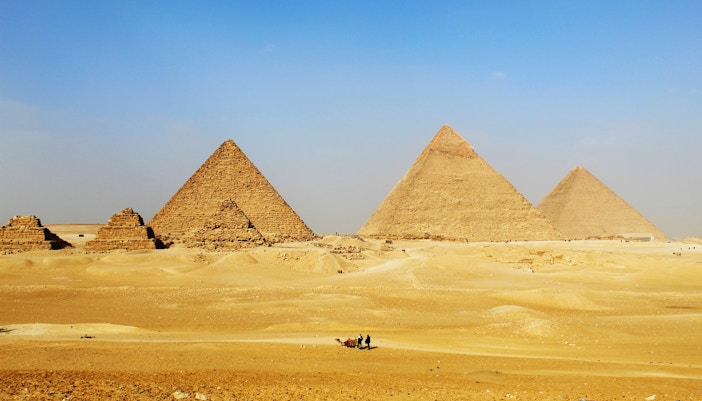
Built c. 2570 BC by Pharaoh Khafre, this is Giza’s second-largest and best-preserved pyramid.
Rare original casing stones
See the few surviving Tura limestone blocks still clinging to the apex.
Enter the burial chamber
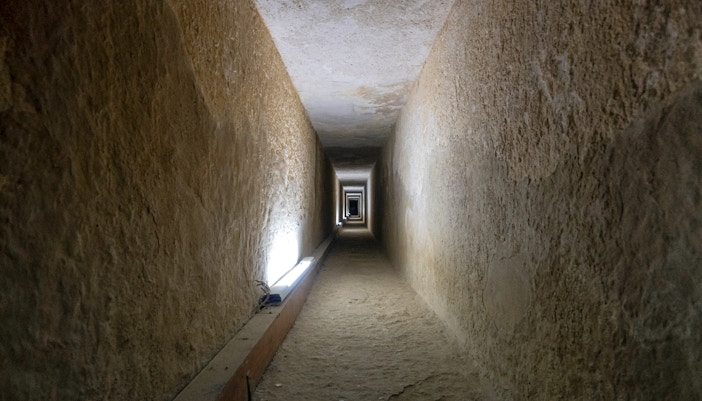
Two passages descend to a single chamber that visitors can access with a ticket.
Monumental mortuary temple
Explore massive limestone and granite walls with polished floors beside the pyramid.
Historic causeway & Valley Temple
Walk the 494-m causeway once lined with statues and admire the Valley Temple’s fine limestone and diorite statues.
Complete funerary complex
Discover how Khafre’s pyramid, temples, and causeway formed an advanced Old Kingdom complex.
Quiet and relaxed visit
Explore the pyramid at your own pace with fewer crowds than at the Great Pyramid.
Iconic photo opportunities
Snap memorable shots of Khafre, the surrounding pyramids, and the Great Sphinx from prime viewpoints.
Plan your visit to the Pyramid of Khafre
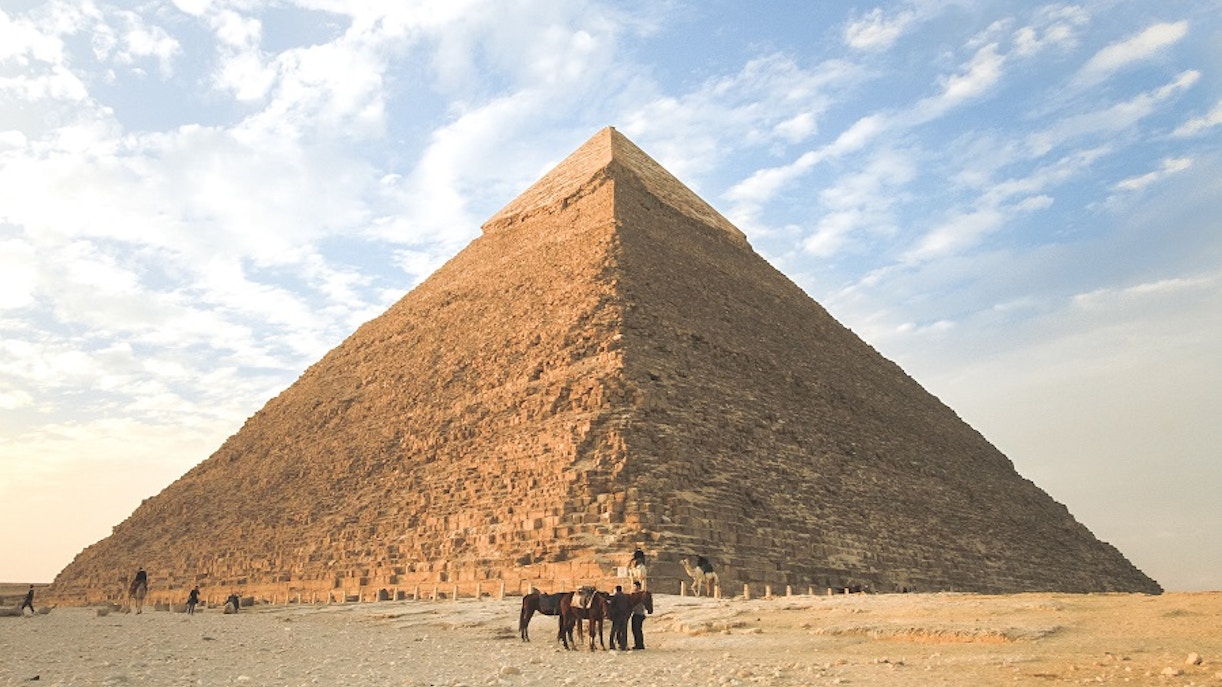
Opening hours: 7am to 5pm (Last entry: 4pm)
- Allow at least 1 to 2 hours to explore the Pyramid of Khafre and its temples.
- Plan 3 to 4 hours if also visiting the Great Pyramid, Menkaure’s Pyramid, and the Sphinx.
- Add extra time for photo stops, camel rides, or walking the causeway.

- Season: October to April offers cooler weather and clearer skies, making sightseeing far more comfortable than the peak summer heat.
- Time of day: Arrive early morning (around opening time, 8 am) or late afternoon for fewer crowds and softer light for photography.
- Special note: Fridays and public holidays can be busier with local visitors, so mid-week mornings are usually the calmest.

- Located on the Giza Plateau, about 13 km southwest of central Cairo.
- Stands behind the Great Sphinx and next to the Great Pyramid of Khufu.
- Forms part of the UNESCO World Heritage Site of Ancient Memphis and its Necropolis.

- By car/taxi: About 30–40 minutes from central Cairo; taxis, Uber, and Careem are the most convenient options.
- By metro + taxi: Take the Cairo Metro to Giza Station, then a short taxi ride to the plateau.
- By bus/microbus: Local buses run towards Giza but can be confusing for tourists.
- Guided tours: Many visitors prefer guided tours or private transfers that include hotel pick-up and entry tickets for a hassle-free visit.
History of the Pyramid of Khafre

Built by Pharaoh Khafre
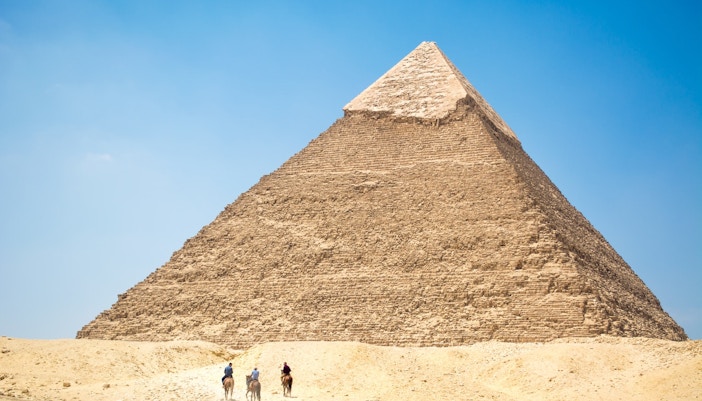
The Pyramid of Khafre was built around 2570 BC during Egypt’s 4th Dynasty by Pharaoh Khafre, son of Khufu, the builder of the Great Pyramid. It is the second-largest pyramid on the Giza Complex.

Purpose and design
The pyramid was planned as Khafre’s royal tomb and serves as the centrepiece of a full funerary complex, including a Mortuary Temple, Valley Temple, and a 494-meter covered causeway.

Burial Chamber
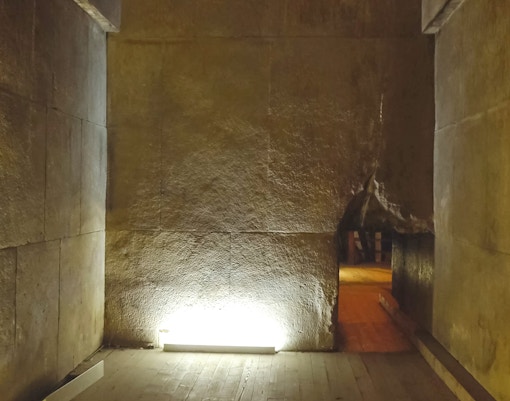
The pyramid’s two descending passages lead to a single burial chamber intended to hold Khafre’s sarcophagus. No treasures remain, as they were removed long ago, but the chamber itself survives.

Religious significance
The pyramid embodied Khafre’s divine authority as Horus on Earth and was designed to ensure his safe passage to the afterlife, reflecting Old Kingdom funerary beliefs.

Legacy and influence
Its intact apex casing stones, steeper slope, and integrated temple complex represent an evolution in pyramid design that influenced later royal tombs.
Inside the Pyramid of Khafre

The experience
- Enter through a small opening on the north face.
- Requires a separate ticket from the main Giza entry.
- Descend dimly lit, narrow corridors lined with massive limestone blocks.
- Passages converge into a single burial chamber carved into bedrock.
- View the spot where Khafre’s granite sarcophagus once stood.

Accessibility
- Steep, low, and narrow corridors, visitors must stoop or climb steps.
- Not recommended for those with mobility issues, claustrophobia, or respiratory conditions.
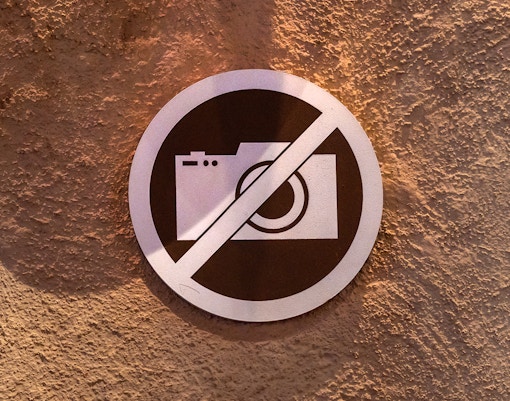
- Photography is often restricted; check the current on-site rules.

Safety & comfort
- The temperature inside is cooler, but the air can be stuffy — bring water.
- Wear sturdy shoes with a good grip; floors can be uneven.
- Bags and large cameras may need to be left outside or with security.

Atmosphere & environment
- The interior has no hieroglyphs or decorations, which surprises many visitors. The “wow” is the engineering itself.
- Silence amplifies the experience; you can really feel the scale and weight of the structure above you.
Interesting facts about the Pyramid of Khafre
- Second-largest at Giza: Built c. 2570 BC but appears taller than Khufu’s because of its higher ground.
- Original casing stones survive: The white Tura limestone still visible at the apex is a rare remnant of how all pyramids once looked.
- Two entrances: Unusually, it has two descending passages that meet in one burial chamber.
- Complex design: The pyramid is part of a full funerary complex with Mortuary Temple, Valley Temple, a long causeway, and the Great Sphinx.
- Linked to the Sphinx: Most scholars believe Khafre commissioned the Great Sphinx as part of his complex.
- Oldest surviving diorite statue: A famous diorite statue of Khafre was found in the Valley Temple and now sits in the Egyptian Museum in Cairo.
Things to Do Around the Pyramid of Khafre
Quad Biking ride
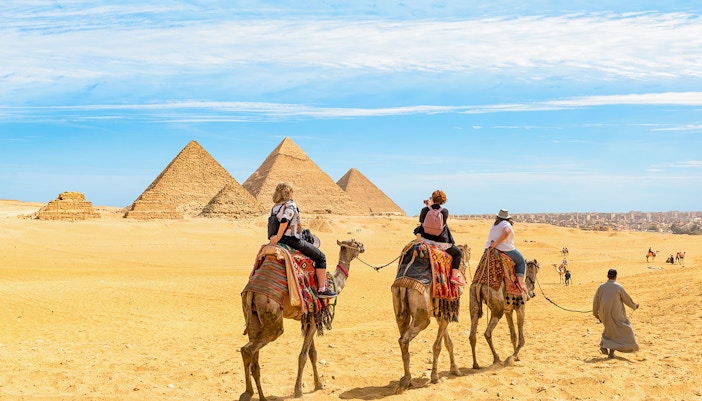
Race across the desert sands on a thrilling quad bike ride with views of all three pyramids.
Quad Biking Tour of the Pyramids

Camel ride
Take a classic camel ride around the plateau for timeless photo opportunities.
Camel Ride Around the Giza Complex

Visit the other pyramids
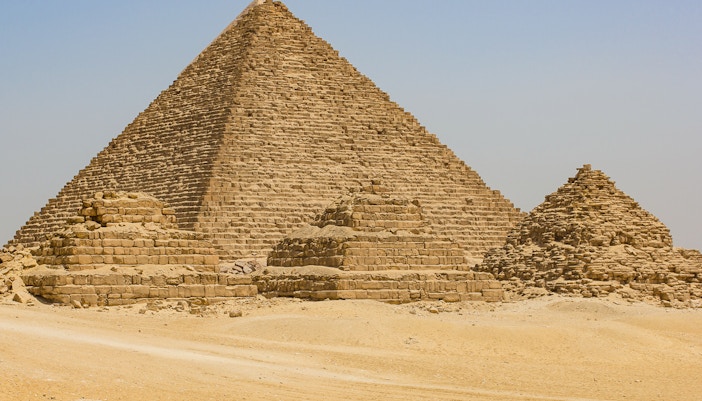
Explore the Great Pyramid of Khufu and the Pyramid of Menkaure to complete the Giza trio.
Giza Complex Skip The Line Tickets + Access to Khufu Pyramid

Visit the Great Sphinx & temples
Walk from Khafre’s Pyramid to the Great Sphinx, Mortuary and Valley Temples.
Half Day Giza Pyramids & Sphinx Tour with Hotel Transfers

Sound & Light Show
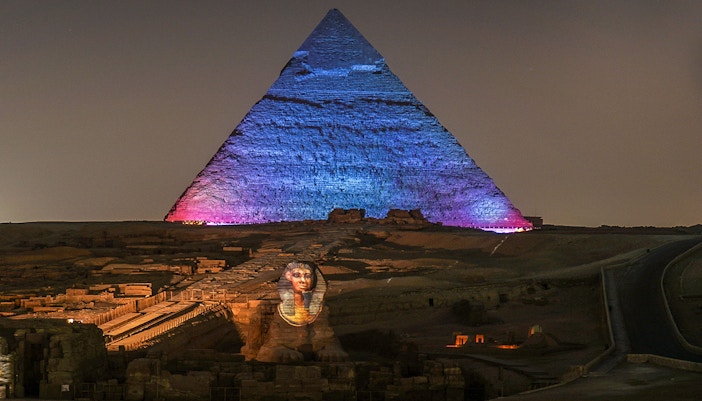
Watch the pyramids come alive at night with dramatic narration and lighting.
Sound & Light show at The Giza Pyramids
Tips when visiting the Pyramid of Khafre
- Book online first: Avoid on-site touts and scams by purchasing entry tickets in advance from official channels.
- Entry tickets: Access to the inside of the Pyramid of Khafre requires a separate ticket; buy early, as numbers are limited daily.
- Arrive early: Morning visits mean cooler temperatures, shorter queues, and better photo light.
- Dress & footwear: Wear light, breathable clothing and sturdy shoes for walking on sand and uneven steps.
- Photography rules: Check current regulations; some interiors restrict cameras or charge an extra fee.
Top places to visit near the Pyramid of Khafre
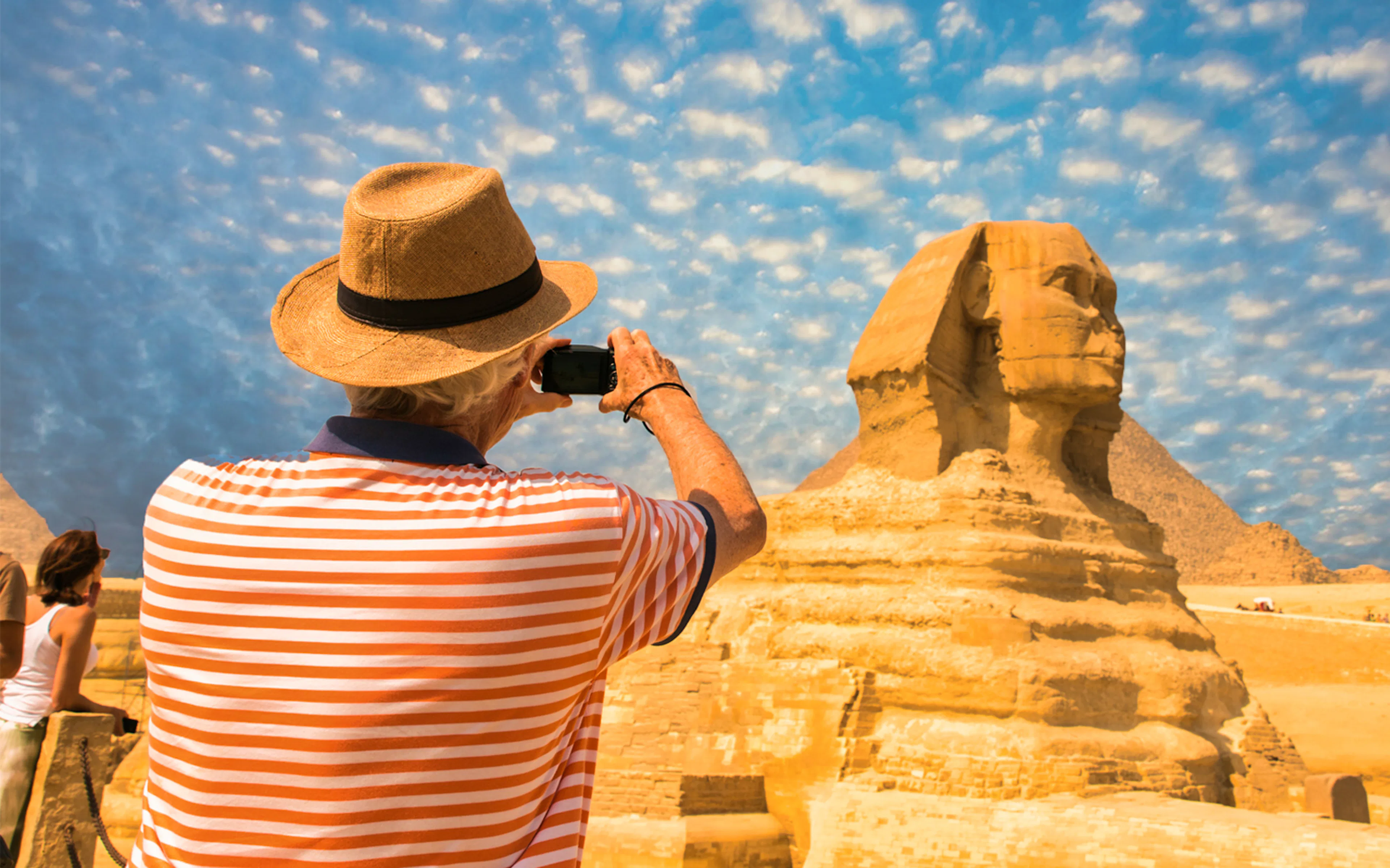
The Great Sphinx of Giza
An Iconic limestone guardian with a lion’s body and pharaoh’s head right next to Khafre’s complex.
The Great Pyramid of Khufu
The largest and oldest of the three, a must-see to complete your Giza experience.
The Pyramid of Menkaure
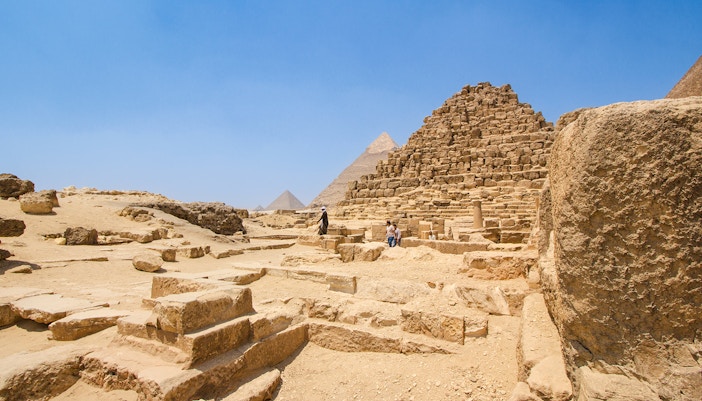
The smallest of the main pyramids with unique temples and subsidiary queens’ pyramids.
The Egyptian Museum of Antiquities
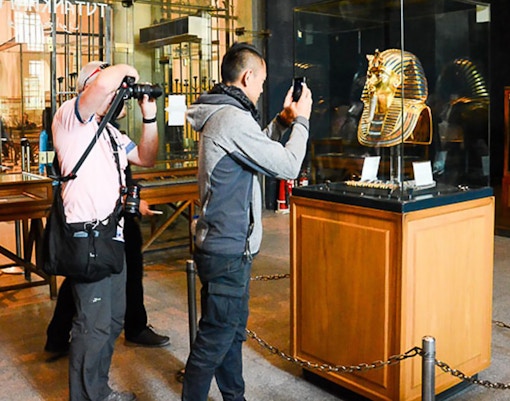
Home to thousands of ancient artefacts, including statues of Khafre, royal mummies, and everyday objects from Egypt’s dynastic periods.
Khan El-Khalili Bazaar
Wander Cairo’s centuries-old bazaar for souvenirs, spices, jewellery, and traditional crafts.
Saqqara & Memphis Day Trips
Combine Giza with the Step Pyramid at Saqqara and Egypt’s ancient capital, Memphis.
Other ways to explore Giza

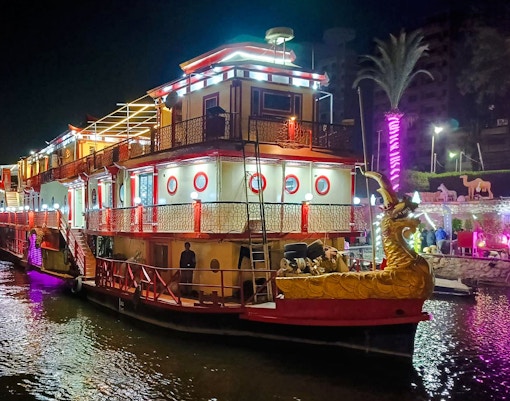
Evening Nile Dinner Cruise

Add a magical dinner cruise on the Nile with live entertainment after your Giza visit.
5-Star Nile Dinner Cruise

Desert adventures
Quad biking, camel rides, and photo safaris on the sands surrounding the pyramids.
Quad Biking Tour of the Pyramids with Optional Camel Ride

Felucca ride on the Nile
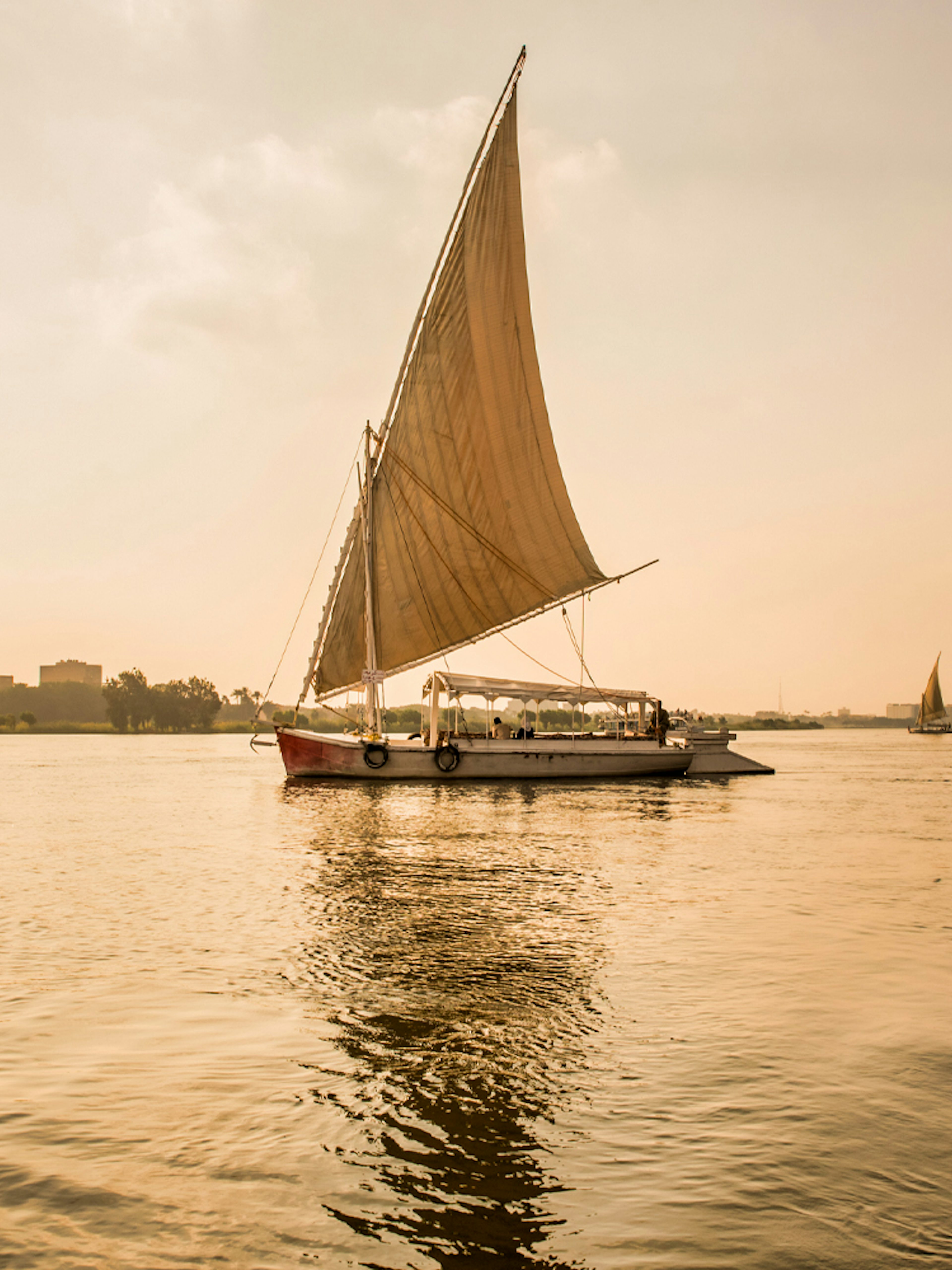
Relax on a traditional wooden sailboat for a peaceful view of Cairo and the river after your pyramid visit.
Nile Felucca Ride

Combo tickets & packages
Save time and money with combined tickets covering multiple Giza attractions or museum entry.
GEM + Egyptian Museum of Antiquities Skip-the-Line Tickets
Frequently asked questions about the Pyramid of Khafre
Yes. Entry to the Giza Plateau covers the grounds only; a separate ticket is required to enter the pyramid interior, and numbers are limited daily.
Typically 8am – 5pm (last entry 30–45 minutes before closing), but hours may vary seasonally, check on-site or online before visiting.
Allow at least 45–60 minutes to see the exterior and interior; longer if you’re also exploring the Mortuary and Valley Temples.
The interior is generally safe but has steep, narrow passages. It’s not recommended for visitors with mobility issues, claustrophobia, or breathing problems.
Photography rules change frequently. Some interiors restrict cameras or charge an extra fee. Check current regulations at the entrance.
Yes, licensed guides can be hired at the entrance or booked online in advance for a more informative visit.
Light clothing, sturdy shoes, water, and sun protection. Large bags or tripods may not be allowed inside.
Yes. The Giza Plateau ticket includes exterior access to all pyramids, the Sphinx area, and temples.
More reads

Plan Your Visit to the Pyramids of Giza

Plan Your Visit to the Pyramids of Giza.jpg?auto=compress%2Cformat&w=702.4499999999999&h=401.4&q=90&ar=7%3A4&crop=faces&fit=crop)
Getting to the Pyramids of Giza